Charts & Hearts story #2

Welcome to the second Charts & Hearts novelette (Word count ~13,000)
In this month’s Thanksgiving-inspired story, Casting Light, an American event planner brings a slice of home to a Swiss village — and runs headfirst into the brooding local artist determined to stop her. This Human Design-infused novelette can be read on its own — no background knowledge needed.
Chapter 1
Avery Harper should have been basking in the soft leather of the reclining seat, sipping champagne, and pretending that she belonged here. That’s what most people would do in Business Class, she supposed.
Instead, she sat upright, seatbelt snug, knees pressed together under the cocoon of a table where her notebook, tablet, and phone lay in a precise, battle-ready lineup. She’d already made three pages of handwritten notes since takeoff. A mess of arrows connected tasks to deadlines; bullet points bulged with questions to ask the vendors; a sticky note screamed CHECK BUDGET AGAIN in all caps.
Her parents would laugh if they saw her like this. Not because she was working — she’d always been the girl who stayed up late to finish a project when everyone else bailed — but because she was doing it from a seat that cost more than a week’s rent. For people like them, and the girl who grew up in a two-bedroom apartment where the dishwasher was her and her brother’s own two hands, this seat was another planet.
Her parents had scraped together what they could to get her through college. Avery had juggled work-study, part-time jobs, and scholarships to fill the gaps. Every internship she’d taken in event planning had been unpaid — an insult she’d swallowed in exchange for experience. She’d earned her current position by grinding through twelve-hour days and saying yes to every opportunity.
And now, for the first time, the project was hers alone. No senior planner to hide behind, no safety net. The Alpine Thanksgiving Festival would live or die on her decisions. She wasn’t going to let anything — weather, vendor mishap, or logistical nightmare — take it down.
She pressed the voice memo button on her phone and spoke quietly, “Add a local wine tasting booth for Thursday night — pairs well with the ice sculpture competition. Ask French bakery about pumpkin tartelets, maybe cinnamon whipped cream topping. Get final confirmation on—”
A low, unexpected chuckle interrupted her train of thought.
She looked sideways. The man in the seat beside her had been quiet for most of the flight, just a shadow of dark hair and a tailored coat in her peripheral vision. Now he’d turned toward her, leaning back with the casual grace of someone who had nowhere urgent to be. His hair was parted loosely in the middle, fringe brushing his brows, framing features that would have made a sculptor weep.
“You’re planning a Thanksgiving event,” he said in lightly accented English, his voice low enough to feel more intimate than the space between them. “But it can’t be held here. Not in the Alps.”
She blinked. “Why not in the Alps?”
He raised his dark brows. “Because France is in Europe. And Europe is not in the US”, he said spacing the words out pointedly.
“I know very well where France is located as I’ve used my passport to board that plane. Also it’s a Thanksgiving festival,” she said crisply. “And for your information, the number of American tourists here in November has gone up twenty percent in the last three years.”
“Mm. And you think they will abandon raclette and fondue for… what is it? Turkey and sweet potatoes?”
“Yes,” she replied, “but only if the sweet potatoes are smothered in marshmallows.”
He winced theatrically. “That’s a crime.”
“It’s tradition,” she countered, gripping her pen.
His mouth curved just enough to hint at a smile. “Not all traditions travel well.”
“This one will,” she shot back. “In fact, you’re invited to see for yourself — front row at the opening night feast.”
One dark brow lifted, a flicker of amusement breaking through his composure. “I don’t need a front row to know when something’s doomed.”
“In that case, invitation rescinded. Only thing that could put a damper on the festival is you standing there radiating doom.”
That earned her a low chuckle — the kind that wasn’t entirely unfriendly — but he said nothing more.
She turned back to her notebook. The pen hovered over the page, but her focus was already slipping. She was aware of the way his gaze lingered, the way he seemed perfectly at ease at thirty thousand feet while she was coiled tighter than the straps on the luggage in the overhead bins. She had her work cut out for her as it was.
For a few blessed minutes, silence returned. She scrawled a reminder to check on the heating equipment and pressed the voice memo button again. “Secure back-up plan for power in case of storm. Arrange—”

“Storms are frequent this time of year,” he murmured without looking at her.
She lowered the phone. “Excuse me?”
“You should know that. High winds, heavy snow. Your little festival could… disappear overnight.” His tone was mild, but there was something in his eyes — a glint like he was testing her.
“It won’t,” she said, her voice even. “I’ve got a contingency plan for every possible weather scenario — backup heating, covered seating, alternate routes for foot traffic, and a reserve generator on standby. I’ve done my research.”
“You sound very sure.”
“I am sure.”
He gave a slow, conceding nod, but the faintest trace of amusement still curved his lips.
She was about to snap something about unsolicited advice when the overhead chime cut through the cabin.
Mesdames et messieurs, nous commençons notre descente vers…
The captain’s voice dissolved into the rush of blood in her ears.
She glanced at her seatmate, who was now watching her with a sharper, more focused look.
Whatever he was about to say would have to wait until they were on the ground.

The carousel was already churning when Avery stepped into baggage claim. She tightened her grip on the handle of her carry-on and kept her eyes on the stream of luggage until a small, hard-shell case slid through the rubber flaps.
She stepped forward, plucked it from the belt, and set it neatly beside her. The case was barely larger than a briefcase — inside, every binder, chart, and vendor contract for the festival was arranged in meticulous order. She’d checked it in without thinking; at the time, it seemed easier than juggling it with her other bag in the overhead bin.
“Business Class lets you bring more than one bag,” came a voice to her left.
She looked up. Her seatmate stood a few paces away, coat draped over one arm. His gaze was on her case, amusement flickering in his eyes.
“That’s small enough to fit under a seat,” he added lightly. “Checking it in was… unnecessary.”
Heat crept up her neck. Of course he’d notice. “Thanks for the tip,” she said evenly, willing herself not to sound defensive. “I’ll try to remember that next time.”
A thought made her turn to him. “How about you? Did you also check in luggage you could have taken with you in the cabin, or are you stalking me?”
“Neither.”
As if on cue, a long, narrow metal case appeared through the flaps. Brushed silver, its corners dented and edges scuffed, it looked like it had seen better days. He stepped forward and lifted it with a care that made Avery curious.
“What’s in there?” she asked.
“A piece of my work.”
She tilted her head. “Which is…?”
His mouth curved faintly, as though the real answer amused him. “Lights. The kind that make people look twice.”
And with that, he turned his back to her, leaving her with the faintest sense that she’d just been handed a puzzle she didn’t have time to solve.
With an exasperated sigh, Avery adjusted the strap of her carry-on and briskly crossed to the exit to find her driver. She was facing another two hours of travel. Passing the sliding doors, she scanned the waiting drivers. A row of black coats, placards, and polite expressions stood ready for their assigned passengers.
Her eyes landed on an older man with silver hair and a warm, weathered face. He was holding a white sign with her name in neat block letters: HARPER.
She walked toward him, offering a professional smile. “Bonsoir—”
But before she could finish, the man stepped neatly to one side and greeted someone just behind her.
“Olivier!”
Avery turned to see her seatmate — who seemed to occupy every space she was in — clasping the older man’s shoulders in a quick embrace. They exchanged a stream of French too fast for her to follow, though she caught the familiar cadence of names and laughter.
When they finally stepped back, Olivier asked something in French, his brows drawing together slightly.
The older man switched to English with an apologetic smile, glancing at her. “I was here to pick up Mademoiselle Harper, take her to Bellecombe.”
Olivier’s head snapped toward her, his expression shifting from curiosity to something sharper. “Bellecombe?”
She blinked. “Yes. Why?”
His eyes narrowed slightly. “Because the last thing my home needs is an American holiday wedged between the harvest fair and the Christmas market.”
The older man scratched the back of his head, glancing between them. “Olivier, you do know you’re already involved in this event, yes?”
Olivier stilled, brows pulling together. “Involved?”
The man gave a small shrug. “The light installation for the festival — it’s yours. They told me last week.”
Avery blinked, certain she’d misheard. Her gaze snapped to Olivier. “You’re Olivier Morel?”
His brows lifted faintly. “You know my name?”
“I’ve been living and breathing this festival for months,” she said. “Of course I know your name. You’re the headline feature for the opening night.”
A flicker of something she couldn’t read crossed his face. “No one told me I would light up a Thanksgiving event in Bellacombe. If they had, I would never have agreed.”
The words hit like a slap, knocking the air from her lungs. “Excuse me?”
“I don’t lend my work to something I don’t believe in,” he said evenly. “And I don’t believe in this.”
She could almost see the moment his thoughts clicked into place, the shift from indignation to cool, measured calculation.
A slow smile spread across his face, calm and certain. “So, Mademoiselle Harper,” he said softly, “no lights, no event.”
And just like that, he picked up his silver case, offered a polite nod, and walked away, leaving Avery frozen in place with the sudden, horrifying realization that the only thing standing between her and disaster was six feet of stubborn purist Frenchman.

Chapter 2
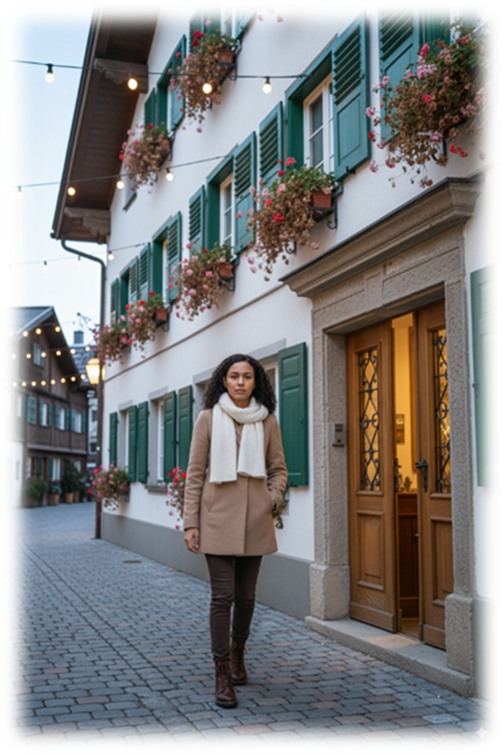
The air in Bellecombe tasted like woodsmoke and the tail end of autumn. Avery stepped out of the boutique hotel’s oak doors, her breath rising in faint clouds. The morning sun was slow to crest the jagged peaks surrounding the town, so the cobblestone street still wore a gauzy layer of shadow, broken here and there by shards of golden light.
Shutters painted in deep alpine green framed windows overflowing with the last stubborn geraniums of the season, their petals curling at the edges. Strings of early winter lights were already draped between buildings, swaying gently in the breeze like they were rehearsing for the season ahead. Somewhere in the distance, a church bell marked the hour, the sound deep and mellow.
She pulled her scarf tighter and started down the main street, her boots clicking over uneven stones. Bellecombe was the kind of place where you half-expected to see a film crew pop out from behind a cart of apples, the whole scene too perfectly rustic to be real. And yet it was — the crisp bite in the air, the warm glow spilling from shop windows, the occasional bonjour from locals who probably knew every face in town.
If only one of those faces belonged to a different lighting designer.
She’d spent half the night combing through her vendor list, trying to picture which names could replace Olivier Morel’s without sending the budget or schedule into cardiac arrest. The pickings were thin. Bellecombe wasn’t exactly brimming with world-class illumination artists, and flying someone in from elsewhere would mean extra permits, extra cost, extra everything. But she was determined. There had to be someone — anyone — willing to step in.
She reached the pastry shop and paused outside, momentarily distracted by the display. Behind the glass, rows of confections gleamed like treasure. Flaky tartes aux pommes glistened with apricot glaze; squat pumpkin loaves wore crowns of sugared pecans; miniature pecan pies sat beside spiced pear tarts, their buttery crusts crimped into perfect scallops.
Inside, the air was a heady blend of cinnamon, nutmeg, caramelized sugar, and dark coffee. Warmth wrapped around her as she stepped in, instantly loosening the knot of tension between her shoulders. The bell above the door jingled and the woman behind the counter — all smiles and powdered sugar on her apron — greeted her with a cheery Bonjour! before ushering her toward a table laden with samples.
Avery slid into the chair, eyes widening at the spread. She picked up a bite-sized square of pumpkin cake first. The crumb was soft and dense, the spices balanced just enough to let the pumpkin shine. “Mmm,” she murmured under her breath. “Yes. Definitely yes.”
Next was a miniature tart filled with roasted chestnut cream and topped with a dollop of whipped Chantilly. It was silky, decadent, and… unexpected. She set the fork down with a small frown. “Maybe not. Too heavy after turkey.”
A pecan pie bite was next, its filling gooey with just the right hint of salt. She closed her eyes briefly, letting the maple-caramel warmth sink in. “This one’s in,” she said aloud, earning an approving nod from the baker.
She tried an apple-cider glazed donut hole — excellent — and a sliver of cranberry-orange bread that packed too much citrus for her liking. That one she pushed discreetly to the side.
One by one, she worked her way through the lineup, her notes forming into a mental shortlist. She was halfway through a spiced pear tart — a contender, but still under review — when the doorbell jingled again.
Avery glanced toward the entrance, expecting another customer, and reminded herself she was here for more than sugar. In a few minutes, she’d be sitting down with the woman responsible for planting the Thanksgiving seed in Bellecombe’s soil — the mayor’s American wife.
The bell above the door jingled again, this time followed by a sweep of cold air and the click of confident heels.
“Avery!”
The voice was warm and unmistakably American. A tall, elegant woman with shoulder-length chestnut hair and a cashmere wrap swept across the shop, her smile wide enough to belong in a Hallmark holiday movie.
Caroline Smith-Picoult kissed Avery lightly on both cheeks before sliding into the seat opposite her. “I hope you started without me. I’d be heartbroken if you waited — and more heartbroken if you didn’t leave me any pecan pie bites.”
Avery smiled despite herself. Caroline was impossible not to like — the kind of woman who carried Vermont in her voice and a perpetual sparkle in her eye. “There are plenty left. And a few pumpkin cakes too.”
Caroline reached for one without hesitation, biting into it with a blissful sigh. “Oh, Avery… this takes me right back. Thanksgiving in Vermont was my absolute favorite holiday. The smell of roasting turkey, maple-glazed carrots, pies cooling on the porch—” She broke off with a dreamy smile. “When I married Gérard, I thought I’d adjust to Alpine traditions easily. And I love them, truly. But November always felt… empty.”
“That’s why you started the festival idea,” Avery said.
Caroline’s eyes shone. “Exactly. I wanted to share it here, to make it a bridge between my world and his. And Bellecombe has always welcomed tourists — it just needed something before ski season to pull them in.”
They spent the next fifteen minutes reviewing Avery’s neatly organized checklist. Caroline confirmed the mayor’s speech slot, offered to connect her with a local musician for the dinner, and even volunteered her own kitchen to bake pies if the caterer ran short. Avery ticked off item after item, feeling the plan solidify in her mind like pieces locking into place.
Then she hesitated, her pen hovering over the last box on the page.
“There is… one more thing,” Avery began carefully. “The light installation. The designer on the roster—Olivier Morel—has informed me he’s not participating.”
Caroline’s smile froze for a fraction of a second. “Not participating?” She leaned forward, her bracelets clinking softly as she folded her hands. “Tell me what happened.”
Avery hesitated, then exhaled. “We were seated next to each other on the flight. I didn’t know who he was at the time. I was leaving myself voice memos about the festival and he… interrupted.”
Caroline’s lips twitched knowingly. “To give you his piece of mind. That man has never met a thought he didn’t think the world needed to hear.”
“He said Americans come to the Alps for skiing, not for ‘imported holidays,’” Avery went on. “He acted like Thanksgiving was some kind of invasive species. And when I tried to push back, he told me ‘not all traditions travel well.’”
Caroline winced, sympathy flickering across her face. “Yes, that sounds like Olivier.”
“And when I invited him to the opening night feast,” Avery continued, irritation rising again just from remembering, “he basically said he didn’t need to see it to know it was doomed.”
Caroline sighed, rubbing the bridge of her nose. “Blunt as ever. He’s never been one to soften his opinions, especially when it comes to Bellecombe’s traditions.”
Avery shook her head. “So, yes—he hates Thanksgiving. Or at least, he hates the idea of it happening here. And I was thinking maybe we could find someone else who—”
Caroline cut in sharply. “No.”
She set down her fork and folded her hands. “Avery, the Morel family isn’t just any family here. They’re one of Bellecombe’s founding names—their vineyards, their old stone houses, their charitable trust. When a Morel lends their name or their work to an event, people take notice. When they don’t…” She gave a small, regretful shake of her head. “It’s noticed just as loudly. And not in a good way.”
“So if Olivier refuses—”
“Some of the local sponsors may quietly back out,” Caroline finished for her. “Vendors will hesitate. The opening night could look half-empty before it’s even begun. We can’t afford that, not for the first year.”
Avery leaned back in her chair, absorbing the weight of that. “I see.”
Caroline’s expression softened. “I know he can be… particular. And blunt. But his work is extraordinary, and if he agrees, the festival will shine, literally and figuratively.”
“I already tried talking to him,” Avery said. “On the plane. It didn’t go well. So maybe you could talk to him—”
Caroline’s expression changed in an instant, the warmth cooling into something more guarded. “Oh, no, no, no. That’s… not a good idea.”
“Why not? You’re the mayor’s wife, not just some American tourist. You’ve been living here for years.”
“Eighteen to be exact.” Caroline leaned back in her chair, lowering her voice. “But when I first came to Bellecombe, I was seeing his uncle. His father’s brother. Briefly. Then I met Gérard.” She gave a little shrug. “Let’s just say my quick change of heart didn’t exactly endear me to the Morels. They’ve been civil, but… I’m not their favorite person.”
Avery stared. “So there’s a family grudge.”
“A long-lasting one,” Caroline confirmed. “And believe me, if I showed up asking Olivier for a favor, he’d say no just for the satisfaction.”
Avery exhaled slowly, tapping her pen against her notebook. She thought about the way he’d smiled at the airport, calm and certain, as if pulling the plug on her festival was no more effort than switching off a lamp.
“All right,” she said at last. “Then I’ll go.”
Caroline’s brows rose. “You’re going to try to convince him yourself? After your plane ride?”
“Exactly after our plane ride,” Avery said, straightening in her seat. “He doesn’t know me, which means he doesn’t know what I’m capable of. And I’m not letting one purist Frenchman tank this festival before it even starts.”
Caroline’s lips quirked, a mix of concern and amusement. “Brave. Or foolish.”
“Probably both,” Avery admitted. She folded her checklist, tucking it into her folder as if that alone sealed her decision. “But if the only way forward is through Olivier Morel, then I’ll just have to make him see the light.”

Chapter 3
Caroline set her empty coffee cup down with a satisfied sigh. “Fuel for courage,” she said, already fishing in her bag for her wallet.
Avery smiled faintly, though her stomach was too knotted to match Caroline’s breezy tone. Courage. Yes. She’d need plenty of that today.
The bell over the café door jingled just as Caroline placed a few euro notes on the saucer. Both women glanced up, and Avery caught the quick flicker of surprise in Caroline’s eyes.
A tall, silver-haired man had entered, his step brisk, his expression open. A younger brunette followed him in, her hand resting lightly on his arm. He paused in the doorway, scanning the room, and then his gaze landed on Caroline.
“Caroline?”
His face broke into a broad smile, warmth lighting his features. He crossed over in an instant, the brunette keeping pace at his side.
“César,” Caroline said, standing. Her voice was composed, but Avery didn’t miss the slight tightening of her wrap around her shoulders.
César leaned in and kissed both her cheeks with unfeigned pleasure. “Mon dieu, it has been far too long. You look—radiant.”
The brunette offered a polite nod before drifting toward the counter, leaving them a moment of privacy.
Caroline introduced Avery briefly, but César asked no questions, his attention fixed on his old acquaintance.
“You’re well?” he asked, eyes kind.
“Very,” Caroline replied smoothly. “And you? Brussels keeping you busy?”
“Always.” His laugh was easy, genuine. “But it’s good to be back, if only for a little while.”
There was no hesitation in his warmth, no hint of awkwardness — and yet, Avery noticed the way Caroline’s smile didn’t quite reach her eyes.
“It was wonderful to see you,” César said sincerely, kissing her cheek once more before rejoining the brunette at the counter.
Avery lowered her voice. “Is that… Olivier’s uncle? Your old boyfriend?”
Caroline kept her smile polite, but her eyes were cool. “Yes. And no, there are no hard feelings. At least not on his side. But his brother, and especially his brother’s wife, have memories like granite.”
She gave a brisk shake of her head, as though brushing the subject aside. “Come. Time to introduce you to your ride.”
The dairy yard smelled of fresh hay and sweet cream. Cows lowed lazily from a nearby pen as a battered white truck backed into place. The driver, a wiry man with sun-browned skin, climbed down and tipped his cap when he saw Caroline.
“This is Monsieur Lavigne,” Caroline said. “He makes regular deliveries to the château. I’ve told him you’ll ride along, and he agreed.”
Lavigne gave Avery a polite nod. “Enchanté, mademoiselle.”
“Merci,” Avery managed, her French accent awkward on her tongue.
Caroline squeezed her arm. “Don’t worry. If the dairy man gets you in, I’ll get you out. I’ll be right behind in my car. Text me when you’ve had enough of Olivier’s brooding castle routine.”
Avery gave a nervous laugh she didn’t quite feel and climbed into the truck.
—
The road wound upward through the valley, past pastures where cows with thick winter coats grazed under the skeletal outlines of bare trees. The air grew sharper, crisper, the sky a pure alpine blue that made the snow on the higher slopes dazzle like glass. As they climbed, Bellecombe spread out behind her, the church steeple and clustered rooftops shrinking into a storybook miniature.
As the truck rattled higher, Avery mouthed the words she’d rehearsed a hundred times since Caroline suggested this plan. Start with professionalism, not apology. Stress the importance of the festival, the opportunity for Bellecombe, the spotlight it would bring to his work. Keep it about the project, not the man. Yet no matter how often she lined the phrases up in her head, they scattered under the pulse of her nerves. And underneath it all, a reluctant awareness tugged at her: excitement. She hated admitting it, but if their first encounter had been under different circumstances, if he weren’t so dismissive and aggravating, she could almost imagine herself… interested.
She shook the thought off, pressing her palms flat against her knees as if to steady herself. Focus. Convince him. Get the festival back on track. That was all that mattered.
And then she saw it.
The Morel estate rose above the landscape like something out of a film—part castle, part manor, its grey stone walls softened by centuries of ivy. Slender turrets pierced the sky at the corners, and a wrought-iron gate guarded the long gravel drive. The vendor slowed without hesitation; the gates swung open as if pulled by invisible strings. No questions asked.
Avery’s pulse kicked up. No one at home would believe this. The girl from a two-bedroom apartment in Ohio, now rolling up the drive of a French château. For a heartbeat, she allowed herself to marvel—the symmetry of the arched windows, the sweep of the terrace overlooking the valley, the sheer weight of history pressing in on every stone.
The truck pulled into the side courtyard, where deliveries were clearly routine. The vendor hopped out and called back, “Venez, mademoiselle. Suivez-moi.” Come, miss. Follow me.
She did, boots crunching on the gravel.
A heavy oak door opened with a slow creak, and a woman in a neat black dress and apron appeared. She had sharp eyes, streaks of gray pulled into a bun, and the kind of presence that made Avery instantly straighten.
“Bonjour, Madame Fournier,” the dairy vendor greeted warmly, tipping his cap as he lifted the first crate of bottles.
“Ah, bonjour, Monsieur Lavigne.” She stepped aside to let him pass into the tiled service hall, then her gaze landed on Avery. Her brow furrowed slightly. “Et… vous?”
Avery’s grip tightened on her folder. “Je… suis responsable pour le festival à Bellecombe,” she managed, the syllables halting. I’m responsible for the Bellecombe festival. “Monsieur Morel a déjà… accepté de participer. Je suis ici pour… discuter son installation.” Mr Morel has already accepted to participate. I’m here to discuss his installation.
Madame Fournier’s expression softened. “Vous êtes Americaine?”
Avery gave a quick nod. “Yes. American.” Then, fumbling back into French: “Mais je parle… un peu.” I speak a little.
The housekeeper’s mouth curved almost imperceptibly, as if amused by her effort. “Très bien. He is back in his atelier. But—” she added, wagging a finger “—he do not like interruptions.”
“I understand,” Avery said, slipping back into English, relieved that at least that much carried across. She had rehearsed the French sentences she suspected she’d need to enter the château a million times.
The housekeeper wiped her hands on her apron and motioned for Avery to follow. She led her across the kitchen and opened a smaller side door that gave onto a vast space.
“Par ici,” she said. “Au bout,” she said pointing down a corridor.
Avery found herself standing in a vaulted hall. The air was cool, scented faintly of beeswax and old wood. Sunlight poured through leaded windows, illuminating carved beams and a stone staircase that curved upward like something from a gothic novel. Antique portraits lined the walls—stern-faced men and elegantly dressed women, the Morel family gazing down at her as if to measure her worth.
For a moment, Avery could only stand there, the weight of it pressing into her chest. She had come to plead her case, but right now, she felt very much the outsider; an intruder in a world that was not hers.
A flicker of unease ran through her. Looking up at the stern faces in those portraits, she almost sympathized with Olivier’s view that imported holidays might feel like an intrusion, a gloss painted over centuries of tradition. Almost.
But she straightened her spine, tightening her grip on her folder. Thanksgiving here wasn’t about erasing Bellecombe’s history; it was about building a bridge, about offering warmth in a season that could otherwise feel barren between harvest and Christmas. It was about community, about connection, about giving people something to celebrate together.
And if she truly believed that—and she did—then she had no excuse to shrink back now.
Drawing in a steadying breath, Avery started down the hall. The corridor stretched ahead, dim and unwelcoming, but Avery squared her shoulders. Soon she was going to face the man who could make or break her career, and she wasn’t leaving without a fight.

Chapter 4
Caroline set her empty coffee cup down with a satisfied sigh. “Fuel for courage,” she said, already fishing in her bag for her wallet.
Avery smiled faintly, though her stomach was too knotted to match Caroline’s breezy tone. Courage. Yes. She’d need plenty of that today.
The bell over the café door jingled just as Caroline placed a few euro notes on the saucer. Both women glanced up, and Avery caught the quick flicker of surprise in Caroline’s eyes.
A tall, silver-haired man had entered, his step brisk, his expression open. A younger brunette followed him in, her hand resting lightly on his arm. He paused in the doorway, scanning the room, and then his gaze landed on Caroline.
“Caroline?”
His face broke into a broad smile, warmth lighting his features. He crossed over in an instant, the brunette keeping pace at his side.
“César,” Caroline said, standing. Her voice was composed, but Avery didn’t miss the slight tightening of her wrap around her shoulders.
César leaned in and kissed both her cheeks with unfeigned pleasure. “Mon dieu, it has been far too long. You look—radiant.”
The brunette offered a polite nod before drifting toward the counter, leaving them a moment of privacy.
Caroline introduced Avery briefly, but César asked no questions, his attention fixed on his old acquaintance.
“You’re well?” he asked, eyes kind.
“Very,” Caroline replied smoothly. “And you? Brussels keeping you busy?”
“Always.” His laugh was easy, genuine. “But it’s good to be back, if only for a little while.”
There was no hesitation in his warmth, no hint of awkwardness — and yet, Avery noticed the way Caroline’s smile didn’t quite reach her eyes.
“It was wonderful to see you,” César said sincerely, kissing her cheek once more before rejoining the brunette at the counter.
Avery lowered her voice. “Is that… Olivier’s uncle? Your old boyfriend?”
Caroline kept her smile polite, but her eyes were cool. “Yes. And no, there are no hard feelings. At least not on his side. But his brother, and especially his brother’s wife, have memories like granite.”
She gave a brisk shake of her head, as though brushing the subject aside. “Come. Time to introduce you to your ride.”

The dairy yard smelled of fresh hay and sweet cream. Cows lowed lazily from a nearby pen as a battered white truck backed into place. The driver, a wiry man with sun-browned skin, climbed down and tipped his cap when he saw Caroline.
“This is Monsieur Lavigne,” Caroline said. “He makes regular deliveries to the château. I’ve told him you’ll ride along, and he agreed.”
Lavigne gave Avery a polite nod. “Enchanté, mademoiselle.”
“Merci,” Avery managed, her French accent awkward on her tongue.
Caroline squeezed her arm. “Don’t worry. If the dairy man gets you in, I’ll get you out. I’ll be right behind in my car. Text me when you’ve had enough of Olivier’s brooding castle routine.”
Avery gave a nervous laugh she didn’t quite feel and climbed into the truck.
The road wound upward through the valley, past pastures where cows with thick winter coats grazed under the skeletal outlines of bare trees. The air grew sharper, crisper, the sky a pure alpine blue that made the snow on the higher slopes dazzle like glass. As they climbed, Bellecombe spread out behind her, the church steeple and clustered rooftops shrinking into a storybook miniature.
As the truck rattled higher, Avery mouthed the words she’d rehearsed a hundred times since Caroline suggested this plan. Start with professionalism, not apology. Stress the importance of the festival, the opportunity for Bellecombe, the spotlight it would bring to his work. Keep it about the project, not the man. Yet no matter how often she lined the phrases up in her head, they scattered under the pulse of her nerves. And underneath it all, a reluctant awareness tugged at her: excitement. She hated admitting it, but if their first encounter had been under different circumstances, if he weren’t so dismissive and aggravating, she could almost imagine herself… interested.
She shook the thought off, pressing her palms flat against her knees as if to steady herself. Focus. Convince him. Get the festival back on track. That was all that mattered.
And then she saw it.
The Morel estate rose above the landscape like something out of a film—part castle, part manor, its grey stone walls softened by centuries of ivy. Slender turrets pierced the sky at the corners, and a wrought-iron gate guarded the long gravel drive. The vendor slowed without hesitation; the gates swung open as if pulled by invisible strings. No questions asked.
Avery’s pulse kicked up. No one at home would believe this. The girl from a two-bedroom apartment in Ohio, now rolling up the drive of a French château. For a heartbeat, she allowed herself to marvel—the symmetry of the arched windows, the sweep of the terrace overlooking the valley, the sheer weight of history pressing in on every stone.
The truck pulled into the side courtyard, where deliveries were clearly routine. The vendor hopped out and called back, “Venez, mademoiselle. Suivez-moi.” Come, miss. Follow me.
She did, boots crunching on the gravel.
A heavy oak door opened with a slow creak, and a woman in a neat black dress and apron appeared. She had sharp eyes, streaks of gray pulled into a bun, and the kind of presence that made Avery instantly straighten.
“Bonjour, Madame Fournier,” the dairy vendor greeted warmly, tipping his cap as he lifted the first crate of bottles.
“Ah, bonjour, Monsieur Lavigne.” She stepped aside to let him pass into the tiled service hall, then her gaze landed on Avery. Her brow furrowed slightly. “Et… vous?”
Avery’s grip tightened on her folder. “Je… suis responsable pour le festival à Bellecombe,” she managed, the syllables halting. I’m responsible for the Bellecombe festival. “Monsieur Morel a déjà… accepté de participer. Je suis ici pour… discuter son installation.” Mr Morel has already accepted to participate. I’m here to discuss his installation.
Madame Fournier’s expression softened. “Vous êtes Americaine?”
Avery gave a quick nod. “Yes. American.” Then, fumbling back into French: “Mais je parle… un peu.” I speak a little.
The housekeeper’s mouth curved almost imperceptibly, as if amused by her effort. “Très bien. He is back in his atelier. But—” she added, wagging a finger “—he do not like interruptions.”
“I understand,” Avery said, slipping back into English, relieved that at least that much carried across. She had rehearsed the French sentences she suspected she’d need to enter the château a million times.
The housekeeper wiped her hands on her apron and motioned for Avery to follow. She led her across the kitchen and opened a smaller side door that gave onto a vast space.
“Par ici,” she said. “Au bout,” she said pointing down a corridor.
Avery found herself standing in a vaulted hall. The air was cool, scented faintly of beeswax and old wood. Sunlight poured through leaded windows, illuminating carved beams and a stone staircase that curved upward like something from a gothic novel. Antique portraits lined the walls—stern-faced men and elegantly dressed women, the Morel family gazing down at her as if to measure her worth.
For a moment, Avery could only stand there, the weight of it pressing into her chest. She had come to plead her case, but right now, she felt very much the outsider; an intruder in a world that was not hers.
A flicker of unease ran through her. Looking up at the stern faces in those portraits, she almost sympathized with Olivier’s view that imported holidays might feel like an intrusion, a gloss painted over centuries of tradition. Almost.
But she straightened her spine, tightening her grip on her folder. Thanksgiving here wasn’t about erasing Bellecombe’s history; it was about building a bridge, about offering warmth in a season that could otherwise feel barren between harvest and Christmas. It was about community, about connection, about giving people something to celebrate together.
And if she truly believed that—and she did—then she had no excuse to shrink back now.
Drawing in a steadying breath, Avery started down the hall. The corridor stretched ahead, dim and unwelcoming, but Avery squared her shoulders. Soon she was going to face the man who could make or break her career, and she wasn’t leaving without a fight.

Chapter 5
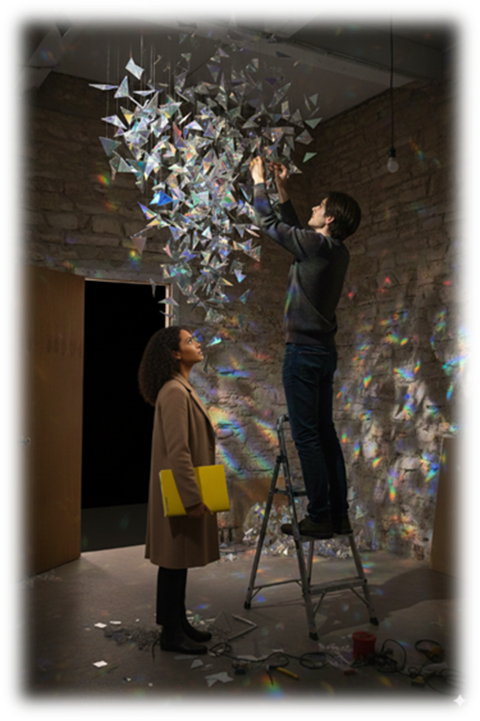
The corridor opened into a cavernous chamber that stole Avery’s breath. Once, it might have been a ballroom — vaulted ceiling, soaring windows, a vast expanse of stone floor. Now it was transformed into something otherworldly.
Cables ran in delicate arcs overhead. Sheets of glass caught the pale light that poured through the windows and fractured it into shifting pools of color across the walls. A low hum vibrated through the space, punctuated by the occasional sharp click of metal.
On one side stood Olivier. He was balanced on a ladder, one hand steadying a frame, the other adjusting a small prism so that a lance of light split cleanly into a rainbow across the vaulted arch. His hair fell forward as he bent to his work, utterly absorbed, as though no one else existed in the world.
Avery lingered at the threshold, folder clutched to her chest. She waited a beat, then another, then she stepped inside.
She cleared her throat. “Monsieur Morel?”
The click of a mechanism, the soft shiver of glass. No answer.
She tried again, louder. “Olivier Morel.”
This time he stilled, his head angling slightly. Without looking at her, he spoke — his voice calm, detached, with that maddening edge she remembered from the plane.
“You’re interrupting.”
Her fingers tightened on her folder, pulse quickening. “Then you heard me.”
Finally, he glanced down, dark eyes cutting toward her in brief acknowledgment. And then, just as quickly, he turned back to his work, as if she were nothing more than another shadow in the room.
Avery’s fingers tightened on her folder. “Monsieur Morel, I won’t take much of your time. I’m here to discuss your contribution to the Bellecombe Thanksgiving Festival.”
That got him. A small, derisive sound escaped his throat, not quite a laugh. “Contribution?” He adjusted the angle of the glass until the rainbow fractured across the wall. “I told you already. I am not interested.”
“You may have told me,” she said evenly, “but on paper you’ve already agreed. I need to finalize details of your installation.”
He turned his head just enough for her to catch the curve of his mouth. That smile — half amusement, half disdain — lit a spark of irritation in her gut.
“You think this is simply an ‘installation,’” he said softly. “A decoration, perhaps. But what I create is not backdrop. It is atmosphere. Memory. To tie it to your imported holiday—” He shook his head, as though the idea corroded the air itself. “It is like pouring cheap wine into a vintage bottle. Corrosive.”
The word landed sharp, like acid on her skin.
Avery inhaled through her nose, steadying herself. She would not rise to the bait. “Thanksgiving isn’t corrosion, Monsieur Morel. It’s connection. It’s a chance for people to gather when the season is turning dark. And that’s exactly what your work does. It brings people together under something luminous.”
He paused then, eyes narrowing slightly, as though weighing her words — but the faint smile never left his lips. “Pretty speeches. I am sure they persuade your sponsors. But this is Bellecombe. We do not need imported warmth. We have our own.”
Her jaw tightened. “And maybe it can have both.”
For the first time, his gaze locked fully on hers. Sharp, assessing, uncomfortably direct.
Their eyes held for a moment too long, and then Olivier turned back to his work, fingers adjusting a glass disc. “If you are determined to stand there, mademoiselle, you may as well make yourself useful.”
Avery blinked. “Excuse me?”
He gestured vaguely toward a wooden crate beside her. “Pass me that clamp.”
She hesitated, then set her folder down and lifted the heavy metal piece, holding it out. He took it without looking, already fastening it into place.
“Merci,” he said absently.
That was it. No explanation. No acknowledgment. Just merci.
The next request came moments later. “The cable, coiled by your feet. Black, not red.”
She crouched, pulling up the thick cord, and stepped closer to hand it over. He attached it swiftly, sparks flaring as the hum in the room deepened.
“Your cables,” she said, trying to keep her voice steady, “connect the pieces together, make them stronger as a whole. That’s exactly what I’m trying to do with the festival. It’s not corrosion, it’s cohesion.”
He didn’t glance at her. “Or entanglement,” he murmured, twisting the cord into its housing. “Too many threads crossing, and the design weakens.”
Her chin lifted. “That depends on the hands that guide it.”
That earned her a flick of his eyes — brief, sharp, like a blade testing its edge — before he returned to the mechanism.
She pressed on. “Look, people come to Bellecombe searching for something they can’t get at home: the mountains, the snow, the atmosphere. Thanksgiving doesn’t erase that — it amplifies it. A holiday about gratitude and gathering, set against this landscape? It only makes the experience richer.”
He gave a soft, skeptical sound. “So you would have Bellecombe perform gratitude like theatre, for tourists.”
“It’s not performance,” she shot back, heat creeping into her words. “It’s hospitality. It’s saying, you’re welcome here, we’ll share what we love with you. Isn’t that what light does? It lets others see, it invites them in.”
For the first time, his hands stilled on the wires. The smallest hesitation. Then, with infuriating calm, he said, “You speak prettily, mademoiselle. But words are easy. Balance is not.”
Then his voice came, almost casual: “There, just above your head. The prism in the frame — lift it slightly so I can align the angle.”
Avery glanced upward. The prism was perched in a delicate lattice of wires, glittering with fractured light. She swallowed hard. “I don’t think—”
“You asked to understand, did you not?” His tone was smooth, edged with amusement. “Go on. Just lift it. Gently.”
Her pride stung at the challenge. She reached up, stretching on her toes, fingers brushing the cool glass. For a heartbeat, the light bent, shifting into a dazzling arc across the wall — breathtaking.
Then the frame jolted under her touch. One wire slipped, another followed, and with a sickening clatter, the prism dropped. Glass shattered against the stone floor, shards scattering like fallen stars.
A chain reaction followed: a section of cables sagged, panels tilted, the careful geometry collapsing in an echoing crash. The hum died, leaving only silence and Avery’s ragged breath.
She froze, hand still suspended midair. Horror churned in her chest.
Glass scattered across the stone floor, prisms splintered into jagged shards. The hum of the installation guttered out, leaving a silence so stark Avery could hear her own pulse thundering in her ears.
Her hand dropped to her side, trembling. “I—I’m sorry. I didn’t mean—”
Olivier descended from the ladder, his expression unreadable. He surveyed the wreckage with cool detachment, then lifted his gaze to hers. “One wrong move,” he said softly, “and it all collapses. That is the danger of forcing in what does not belong.”
The words struck like a slap, but Avery’s spine stiffened. “This wasn’t about belonging,” she said, her voice shaky but gaining strength. “It was about me trying to help. You set me up in there, handed me pieces without a word of warning, and I trusted you. If it collapsed, maybe it wasn’t as strong as you wanted me to believe.”
His eyes narrowed, but he didn’t answer.
She gathered her folder, clutching it to her chest like armor. “You think you proved your point, Monsieur Morel, but you didn’t. Community doesn’t break this easily.”
Then, before the wobble in her throat could betray her, she turned and strode for the door.

Chapter 6
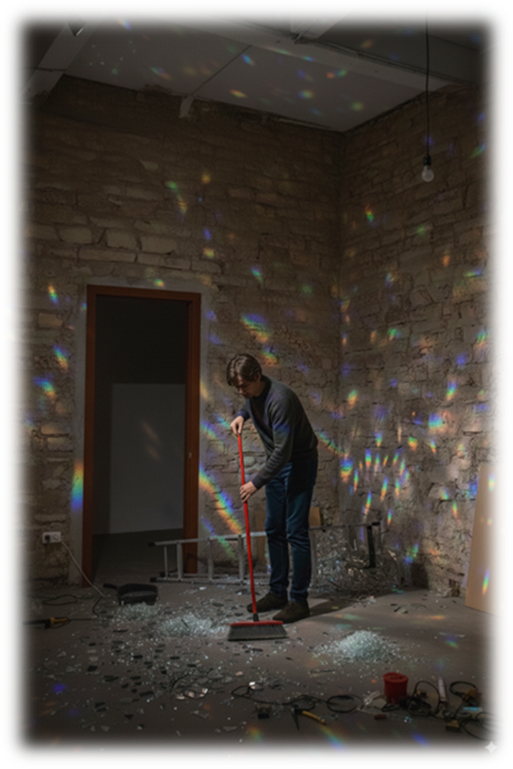
The crash had left the atelier hollow. No hum, no shimmer of refracted color, only the quiet scratch of Olivier’s broom as he swept glass into glinting piles. Tiny fragments skittered across the stone floor, catching the afternoon light like fallen stars. He worked methodically, jaw tight, movements clipped.
The piece had been unstable. He’d planned to dismantle it himself, rebuild it properly. Still, watching her face crumple, hearing the tremor in her voice as she tried to apologize—something inside him twisted. He told himself it was necessary, she had to stay away. Yet the echo of her words lingered, stubborn as smoke: “Community doesn’t break this easily.”
The door hinges groaned. He didn’t turn. He knew who it was.
“Mon fils.”
Monique Morel’s voice carried its usual blend of gentleness and command. Her heels clicked softly on the stone, the faint clink of a glass accompanying her steps. When she came into view, she was exactly as the château demanded: tall, poised, her taupe dress tailored to perfection, a stemmed glass of deep red wine balanced in her hand as though it were part of her. Silver gleamed at her temples, softening rather than aging her.
She paused by the ruined scaffolding, her gaze sweeping the wreckage, then settling on him. “You went too far, Olivier. Such waste. That piece did not need to be shattered. You could have dismantled it carefully, kept half intact.”
He leaned on the broom, expression unreadable. “It looks worse than it is. I’ll recycle the shards, cut them down, reframe them. I’ve crates of glass in storage—enough for three more prototypes.”
Her brow arched. “So you break only to build again.”
“Exactly,” he said evenly. “Glass is patient. It can be remade. What matters is the vision, not the first attempt.”
Olivier set the broom against the wall, flexing his hands to rid them of dust. “After all, she destroyed it.”
His mother’s brow arched. “Destroyed what you were already going to tear down? You told me yesterday it had stability issues.” She took a slow sip of wine, her eyes never leaving his. “You let her believe she ruined your work.”
He exhaled sharply, gaze sliding away. “Better to end things here. This way she will forget this stupid festival.”
She sighed. “The people are eager for it, Olivier. There’s a current in the town I haven’t felt in years, a sense of anticipation. Even César said he’d go.”
His brows arched. “With Caroline behind the whole thing?”
Her lips curved in a thin line. “César has moved on with Sabine, as people should do. He didn’t cling to old wounds. He built a new life.”
The words hung between them, edged and deliberate.
Monique took another sip of her wine. “I’ve looked at some of the plans for the festival. She has done exceptional work. It’ll be fun.”
He gave a short, wry laugh. “She won you over, too?”
Her head tilted, eyes narrowing as if catching a scent on the wind. “Too? Why, mon fils? Who else has she cast her Thanksgiving magic on?”
Olivier bent again to his broom, brushing shards into the pan with deliberate precision. “No one who matters,” he said flatly.
His mother’s eyes sharpened. “Ne dis pas ça! Do not speak of yourself as if you are nothing. I cannot stand it, and you know it.”
“She gets under my skin!” he bit out, his eyes locking with hers. Then he bowed his head. “More than she should. I felt it in the plane. We traveled together. Side by side.” He passed his hand through his hair. “There was this weird connection.”
For a moment, Monique only looked at him, still as stone, her wineglass paused mid-air. He wasn’t used to silence from her. It made him wonder if he’d revealed too much.
“Well, I like her. She has fire and finesse. It has been too long since I saw anyone speak to you like that.”
“Perhaps. But what difference would it make if I liked her too?”
His mother’s eyes lingered on him, searching, weighing. At last she gave a quiet sigh, the sound threaded with both resignation and sorrow.
“You guard yourself so tightly, Olivier, as though caring for someone were a weakness. But I saw her spirit. She is not afraid of you, or of this place. You let the past teach you that opening your heart ends in loss, but not every story repeats itself.”
He kept his gaze lowered, sweeping the shards into the pan, each scrape of glass against stone louder than her words.
“But enough of them do,” he said quietly, the sound almost lost beneath the steady sweep of glass.
Her lips pressed together, as if to protest, but he did not look up. The broom rasped steadily, drawing glittering fragments into a neat pile.
At length she turned away, her heels clicking softly toward the door. “One day,” she said, pausing in the threshold, “you will learn that letting someone matter is not the same as weakness.”
The door closed, leaving only the silence of the atelier and the broken shimmer of glass at his feet.

Chapter 7
The quilt of her hotel bed cocooned Avery like armor, but it did little to blunt the sting in her chest. Her sleep had been fitful, chased by fragments of glass and the hollow echo of Olivier’s voice, and when she’d blinked into the pale light edging around the curtains she felt wrung out, heavy-eyed, her head thick with the aftertaste of too much sugar and humiliation.
Now instead of breakfast, she was spooning straight from a porcelain tub of glace de marrons—chestnut ice cream laced with ribbons of candied chestnuts and a splash of cognac. A regional specialty, according to the pastry girl who had sold it to her with a conspiratorial wink. A delicacy. Today, it might as well have been heartbreak fuel.
She shoveled another bite in, wincing as the cold burned the roof of her mouth. It was absurd, she knew, indulging like this, as though she’d been dumped by a boyfriend she didn’t even have. But the humiliation in Olivier’s atelier had stung with the same rawness. She could still hear the glass shattering, could still feel his detached gaze like frost on her skin.
He hated her now. That much was certain. If he’d been indifferent before, now he’d written her off entirely. And the festival? Ruined. And not just the festival—her job, her future. If the sponsors pulled out, if word spread that the American coordinator had destroyed the Morel installation, she’d be finished. All those years clawing her way up from scholarship kid to trusted project lead—gone in a single, humiliating afternoon.
Then she remembered.
Her wave. Her damn emotional wave in her Human Design chart.
It rose and crashed with operatic drama, but it always, always ebbed. She had studied it long enough to recognize the pattern. Channel 41–30, the Channel of Recognition. The most romantic, the most tempestuous. One moment convinced the world was ending, the next climbing back into the light. She knew she was here to recognize that emotional experiences are both formative and transformative, to deeply feel every high, every crash. And she could feel descending the wave now, the sharp edge dulling, the self-pity loosening its grip.
She laughed softly, a brittle sound in the quiet room. “God, I’m pathetic.” She set the tub aside and reached for her phone.
The impulse came unbidden—a tug from her Sacral center, right after emotional clarity settled, the sort of bodily knowing she had learned to respect. She hesitated, thumb hovering. She had checked before, in weaker moments. His profile, those carefully framed images of light, glass, shadow. But now? After what had happened?
Half-dreading, half-compelled, she opened Instagram and searched his name.
Her stomach clenched as his page loaded. For one terrifying beat she expected to see it there; a photo of her blunder, the shattered glass, a sly caption about clumsy Americans.
But it wasn’t there.

Instead, the top post stopped her cold.
A photograph of the installation—intact, luminous, the lattice of glass catching light in a blaze of fractured color. The caption read: “Some patterns dazzle but don’t endure. Still, collapse is only part of the process. Tomorrow I rebuild.”
Avery blinked, her pulse quickening. She scrolled down, double-checking the timestamp. Yesterday morning. Hours before she even set foot in the château.
Her throat went dry.
He’d known. He’d known the piece was flawed. He’d planned to dismantle it himself. And yet he’d stood there, cool as marble, watching her drown in guilt. Fury surged, hot and sharp, sweeping away the last traces of despair.
He had let her believe she’d ruined everything. He’d stood there in that cavernous room, silent and unflinching, letting her walk away convinced she’d toppled the one piece that could anchor the whole event. And the more she thought about it, the more it stung like strategy. As if he wanted her rattled, defeated, ready to pack her bags. As if her humiliation was just another tool in his campaign to strangle the festival before it could even begin.
Avery shot upright, the spoon clattering to the floor. Enough. She wasn’t going to hide in bed with half-melted ice cream while he pulled strings to sabotage her work. She strode to the window and yanked the curtains wide.
Snow had fallen overnight, blanketing the rooftops of Bellecombe in clean white drifts. Fat flakes still floated down in lazy spirals, muffling the street below. The sight should have been peaceful, but to Avery it looked like a challenge, daring her to move.
Her gaze dropped to her watch on the nightstand. Ten minutes to nine o’clock. If she remembered correctly, Monsieur Lavigne made his dairy run to the château around this time.
Her pulse leapt.
She dragged on her boots, pulling her coat over the pajama top she’d never bothered to change out of. No time for vanity, no time for second thoughts. She grabbed her folder and hurried down the hotel’s narrow staircase, the cold air searing her cheeks as she pushed out into the snow.
Her hand hovered on the entrance latch, a voice in her head whispering that this was insane—marching out into the snow half-dressed, chasing down a milk truck like some lunatic on a vendetta. But the voice was no match for the surge in her chest. The wave had turned again, and now it carried her on a tide of raw certainty.
This wasn’t madness. This was justice. He had let her walk away humiliated, and she wasn’t about to let him keep the satisfaction.
A flicker of something warmer sparked underneath—anticipation, clawing low in her belly. She was going to see him again. And this time, she wouldn’t be the one on her knees.
She tugged her coat tight, jammed her hands into her pockets, and stepped out into the drifted street, heading toward Monsieur Lavigne’s farm before reason could catch her.

The truck jolted along the narrow road, each bump knocking Avery deeper into her restless thoughts. She sat in the back seat, looking at the folder on her lap, wondering why on earth did she even brink it? But the folder was the least of her worries.
She’d felt a surge of excitement when Monsieur Lavigne didn’t even question her need to return to the château. But he was just the first line she’d have to cross. What if Madame Fournier wouldn’t let her in this time? She must have heard of yesterday’s debacle. She rehearsed possible lines—appeals to duty, to Olivier’s reputation, to the festival itself—none of them sounding remotely convincing in her head.
The road narrowed, winding between a bank of snow and a stone wall, and headlights flared ahead. Another car edged toward them, forcing Monsieur Lavigne to brake. As the vehicles drew parallel, Avery’s stomach dropped. Behind the other wheel was Madame Fournier, her stern profile unmistakable.
Avery ducked low, pressing herself against the back of the seat, heart hammering. The truck rolled to a stop.
“Bonjour, Madame Fournier,” Monsieur Lavigne called, his voice mild as he lowered the window. “Tout va bien? Je passe?”
A murmur of assent, then Au revoirs and then the other car eased forward, disappearing around the bend.
Avery exhaled shakily. Monsieur Lavigne’s eyes flicked to her in the mirror. “Tout va bien?”
She straightened quickly, holding up her silver bracelet, which she’d slipped off and clutched in her palm. “Dropped it,” she said, shaking it lightly as if it had rolled under the seat.
He gave a small grunt of acknowledgment, no further questions. The truck jolted into motion again, tires crunching through the snow.
By the time they reached the château gates, Avery’s pulse had steadied. One obstacle eliminated. A sign that she was on the right path. The guard waved them through without hesitation, and Lavigne pulled up to the familiar service entrance. He didn’t even blink when she slid out of the truck beside him, hugging her coat close.
Inside, the corridors were quiet, and her boots echoed on the floor as she crossed to the atelier, her grip tightening on the folder, its only purpose now to give her something to hold when her resolve threatened to slip.
It struck her, with a flicker of surprise, that she hadn’t even rehearsed what to say. That wasn’t like her. She always ran the words through in advance, smoothing every angle, preparing for the rise and crash of her emotional wave. But now she had nothing scripted — only the indignation of being tricked, burning hotter with every step.
She pushed the heavy door open—and her heart lurched.
Olivier lay sprawled on the floor among his scattered tools, his skin pale, his body unnervingly still.

Chapter 8
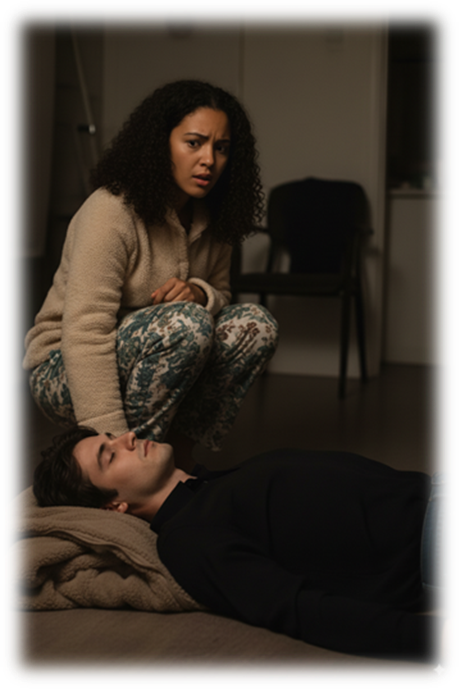
The folder slid from Avery’s hand, scattering papers across the stone floor as she dropped to her knees.
“Olivier?” Her voice cracked as she pressed her hand to his shoulder. His skin was clammy, his breath shallow. He tried to lift a hand, but it faltered halfway, falling uselessly against the floor.
“Insu…lin,” he whispered, his eyes glassy. “Not here. My mother’s bureau… next room. Top drawer.”
For a heartbeat, panic clawed at her throat. Then training, instinct, snapped into place. She knew this. She had done this before.
“I’ll be right back,” she said firmly, squeezing his shoulder once before springing to her feet.
The next room opened into a paneled office, elegant but functional. A massive walnut desk stood against the far wall, papers neatly stacked, a crystal decanter of amber liquid beside them. Avery yanked open the top drawer, rifling past fountain pens and leather-bound notebooks until her fingers closed around a familiar plastic case. Syringes. Vials. Relief flooded her so sharply it made her knees weak.
She was back in seconds, kneeling at his side. He was worse; lips pale, sweat dampening his hair, his words barely audible.
“Avery…” His eyes searched hers, unfocused. “I’m sorry… so sorry…”
“Save it,” she said briskly, snapping the vial into place. Her hands were steady, almost automatic, the muscle memory of too many nights at her brother’s side guiding her now. She lifted his sleeve, swabbed his skin with the alcohol pad tucked inside the kit, and delivered the injection in one sure motion.
He flinched but didn’t resist. “Didn’t… mean…”
“Quiet,” she said, her tone clipped but not unkind. “Just breathe. You’ll be fine.”
The plunger slid down. The sharp scent of antiseptic clung to her hands, anchoring her focus. She’d been here before. She knew how to keep her head clear when someone else’s body failed them.
Still, it unnerved her—his sudden vulnerability, the way his cool, superior veneer had cracked into raw pleading. She filed it away, shoving the thought aside. Analysis could wait. For now, all that mattered was keeping him conscious until the insulin did its work.
The syringe slipped from Avery’s fingers, forgotten, as she steadied Olivier’s arm. His skin was damp with sweat, but his gaze clung to hers, stubborn even in weakness.
“I behaved like… a fool,” he murmured, breath hitching. “I regret it.” His head shifted, a faint nod toward the scaffolding above. “I was… working. For your festival.” His lips curved in the ghost of a smile.
Avery followed his eyes—and her breath caught.
Suspended from the rafters, the glass had been transformed overnight. Arcs and panels overlapped in deliberate geometry, scattering the pale morning light into trembling ribbons of color. Blues and golds danced across the stone walls, pooling like liquid fire. It wasn’t an experiment anymore. It was art.
“Ravery,” Olivier whispered, his voice almost too soft to catch. “So I can remember you… when you leave.”
Avery frowned, slipping her coat from her shoulders, then folding it and tucking it carefully beneath his head. “Ravery? As in madness?” She smoothed the fabric under him, keeping her voice light even as her pulse raced. “That’s what I make you think of?”
Before he could form a response, the sound of hurried heels struck the corridor.
“Mon Dieu, Olivier!” a woman’s voice carried through the doorway before Avery even turned. She swept into the atelier, her black coat half-unbuttoned, a jeweled pin askew at her collar. She clutched a small clutch purse in one hand, and a glassiness clung to her gaze, enough for Avery to wonder if champagne had been flowing wherever she’d come from. Behind her, a man trailed, eyes wide in panic.
His parents.
Relief broke over her. Whatever happened next, it was no longer all on her shoulders.
“Regarde-toi… si pâle…” the mom said, dropping to her knees beside him. Look at you. So pale. Her hands hovered over his chest, his face, not knowing where to land. “Va chercher l’injection!” she ordered her husband who swiveled towards the door instantly.
But Avery was already reaching for the syringe where it lay on the floor, the empty barrel glinting in the light. “C’est fait,” she said quickly, then switched to English, holding it up for the woman to see. “It’s done. He has it already.”
The woman’s eyes narrowed, sharp and assessing. “Vous avez fait ça ?”
“Yes,” Avery answered, steady despite the racing of her pulse. “He asked me. I know how. My brother… he has Type 1.”
“Did you come back to fight?” his mother broke in. “Is that what set this off?”
“She found me,” Olivier’s voice rasped from the floor. “I asked her to … inject.” The words barely cleared his lips before his lids sank shut again.
Olivier’s father hovered at the edge of the scene, phone in hand, his voice hesitant. “Monique… est-ce que j’appelle l’ambulance?”
“Yes, you need to ask?” Monique snapped without looking at him, her tone brisk. “Tout de suite.”
“Pas l’hôpital…,” Olivier muttered, the words slurring together.
Her hand closed more tightly over his. “Non, ça n’ira pas. Tu viens, Olivier. Point final.” She then turned to Avery. “He must be monitored at the hospital. After a crisis like this, it isn’t safe to leave him here.”
Olivier sighed and closed his eyes in resignation.
Monique held Olivier’s hand between both of hers, her rings glinting against his clammy skin. “He refuses to wear the monitor on his arm,” she said bitterly, her gaze fixed on his face. “One glance at my phone, and I would have known before it came to this.”
Olivier’s eyes fluttered open. “I’m thirty years old,” he said in a low, resigned voice, “not a child. I don’t need a nurse.”
“Ah, toujours aussi têtu…” said the mom wistfully, but Avery didn’t catch the meaning of that.
The silence that followed was heavy, broken only by the low electric hum of the installation above. Avery sat back on her heels, taking it all in—the father’s quiet deference, the mother’s unyielding command, Olivier’s wounded pride. Their bond was intricate as the glass overhead, yet just as brittle.
Monique sighed, her gaze drifting over Avery—then pausing at her mid-torso.
“Are you wearing pyjamas?”

Chapter 9
The waiting room smelled faintly of disinfectant and overbrewed coffee, a sterile mix that did nothing to calm Avery’s nerves. She sat stiffly in one of the plastic chairs, her coat clutched tight around her though the radiators hissed with heat. Beneath it, she could feel the thin cotton of her pyjamas against her skin, a constant reminder of just how ridiculous she must look here.
She tugged the lapels closer, as if she could hide what she was wearing from the nurses who occasionally glanced their way. It wasn’t Olivier’s health that knotted her stomach now—he was stable, they’d said, he would be fine. No, it was the prospect of facing him again dressed like this, in the very clothes she’d worn when she trespassed into his château like some overeager intruder.
The ride over had been silent, the kind of silence that pressed on her ears until she wished the ambulance siren had never stopped. She’d been halfway into an awkward explanation—stammering about Monsieur Lavigne, the milk run, her coat tossed aside for a pillow—when the wail of the siren had cut her off. She’d never been so grateful for a noise in her life.
Her emotional wave had broken and ebbed by now, leaving her with the flat, embarrassing clarity of hindsight. What had she been thinking? Storming the château in her pyjamas, demanding to be heard? The Marons could easily have her charged with trespassing, and they’d have every right.
She pressed her fingers to her temples, exhaling slowly. Still she had helped. She’d been the one to find him, to steady the syringe in her hand and give the shot when he needed it most. That part, at least, no one could take from her. She only prayed it would outweigh the memory of her barging in uninvited. Maybe, if she was lucky, it would be forgotten.
When the Marons returned, Monique looked transformed. Her cheeks were flushed, her smile brighter than anything Avery had seen in the château. She crossed the waiting room with purpose, her heels clicking softly against the tile.
“Olivier wants to see you,” she said, her accent thicker with the softened edges of relief. “But in five minutes. The nurse is with him now.”
Before Avery could answer, Monique lowered herself into the chair beside her and took both of Avery’s hands into hers. The grip was warm, firm, oddly maternal. “Thank you,” she said simply. “You were there at the right moment.”

Avery swallowed, caught between discomfort and something like gratitude. “I just did what anyone would.”
“No, not anyone.” Monique shook her head. “Olivier… when he works, he forgets everything. Meals, time, even his injections. It has happened before. He refuses the patch—the monitor on the arm—until now.”
Avery nodded. “I know the type. Hyperfocus can swallow everything else.”
Monique hesitated, her fingers tightening around Avery’s. “He promised me… he would wear the monitor if I…” She trailed off, her composure flickering. “If I quit. Quit the wine. You see, my worry for him… it has become its own poison. I think I am addicted now.”
The words hung between them, raw and unadorned.
“I’m sorry,” Avery said softly. “That must be so hard, for both of you.”
Monique gave a brittle smile. “He despises it. And yet, he drives me to it. I know he is a grown man, but worry doesn’t recognize birthdays,” she added wistfully.
Avery drew in a slow breath, choosing her words carefully. “When someone close turns to addiction, that creates uncertainty, and fear. But also guilt because you start to wonder if somehow you and your disease are the cause of all evil. And sometimes, the only coping mechanism left is to overwork—to cling, to focus as if it can hold the ground steady.”
Monique’s eyes lingered on her. “How old are you?” she asked suddenly.
“Twenty-five.”
“So young. How can you speak with such weight, such wisdom?”
Avery hesitated, then smiled faintly. “My brother, Jonathan… he has Type 1 as I told you when you found me with the syringe. At first, it was all fear and worry, of course. But once you learn to look past that, you see the facts. With care, with balance, he can live a completely normal life. And he does.”
Monique’s grip tightened, her eyes searching Avery’s. “And he is well?” she asked visibly eager for a positive answer.
“He’s thriving,” Avery said. “He’s made peace with it, and it hasn’t stopped him from building the life he wants. He married his longtime girlfriend and has recently become a dad.” She straightened and smiled. “And I’m a proud aunt of the sweetest baby boy.”
Monique’s smile was rueful. “Olivier had a longtime girlfriend too. He loved her,” she said quietly. “Truly, madly. And when he … had an episode, when he needed her, she fled without looking back. Since then…” She exhaled, shaking her head. “It marked him. He trusts no one with his fragility.”
Before Avery could respond, a nurse in pale scrubs appeared at the doorway. “Mademoiselle Harper?” she asked in careful French. “Monsieur Morel vous attend.”
Avery rose, pulse quickening, and followed the woman down the hall. When she stepped into his room, she stopped short. Olivier was propped against crisp white pillows, color back in his face, his dark hair rumpled but his eyes clear. The tension that had bristled around him at the château seemed to have drained away.
She would later think about why the sight of him struck her so deeply, but in that moment she let it wash over her. It wasn’t just the aristocratic angles of his face or the shadow of fragility that clung to him—it was the quiet force beneath it all, the sharpness of his mind and the resilience threaded through him. The insulin, the monitors, none of it erased the impression of strength. If anything, it sharpened it. She moved forward and stood beside his bed.
“You came,” he said, voice low, a small smile tugging at his mouth. “I would have bet you’d left. I know how smothering my dear mother can be. Especially when she’s drinking. One of the reasons I stay away from France.”
Her pulse picked up, an unsteady rhythm in her chest, and she realized she was gripping the strap of her bag too tightly. And suddenly, panic stirred. She couldn’t afford this—not here, not with him. She’d come to secure her festival, not lose herself in Olivier Morel.
“Well, now that you’re feeling better, I should probably leave you to rest.”
He reached for her hand before she could retreat. His grip wasn’t strong, but it was steady. “Stay.”
Something in his tone made it hard to refuse. She sank into the chair at his bedside. He studied her for a long moment, then said, almost like a confession: “From the flight—I felt something. A pull. But this…” He gestured vaguely toward the IV line, the monitor at his bedside. “This is why I push people away. They either smother me like my mother, or they bolt. Like I’m a leper.”
The words were so bleak she didn’t think, just blurted, “If lepers looked like you, half the world would be lining up to catch it.”
For a heartbeat, silence hung between them. Then, to her astonishment, he laughed—an unguarded, genuine laugh that lit his whole face. The sound went straight through her, sealing what she had been resisting: she was undeniably, physically drawn to him.
His laughter faded into a lingering smile, his eyes glinting with mischief. “So… you find my looks pleasing, then?”
She arched a brow. “Pleasing? Do you work only with glass but avoid mirrors? You’re drop-dead gorgeous.”
The words left her mouth before she thought them through. Heat rushed to her cheeks as the weight of what she’d just said crashed over her—drop dead. Her gaze darted to the IV line, to the monitor, then back to him. “Oh God—I didn’t mean—” She reached for his other hand in reflex.
But his fingers closed gently over hers, steadying the moment. “It’s all right. You can call me whatever you like. I’d just give anything,” he added more quietly, “to be normal.”
Relieved that she hadn’t hurt him, she waved a hand dismissively. “What? That? It’s just a glitch in the system. Normalness with a hiccup.”
From her bag, she pulled up a photo on her phone—Jonathan beaming with his wife and their new baby. She held it out to him. “For him, I learned how to give insulin shots from a very young age. This is my brother, Johnathan. Thriving. Married, father to a newborn, still the most stubborn man I know.”
Olivier took in the image, his expression shifting. Something fragile, almost boyish, flickered across his features, as though the possibility of such a life had never truly occurred to him.
Watching him, Avery felt a swell of shock—how had no one ever given him that hope? Between a mother numbed by drink and a woman who’d abandoned him, he’d been left to believe this life was impossible. The impulse rose in her chest, unbidden and fierce: I’ll show him. I’ll be the one to prove it’s not like that.
He kept his eyes on the photo. “What are the odds?” he said. “You coming in when I needed help and knowing exactly what to do. Life works in mysterious ways.”
She moved closer, perching on the edge of the bed. “Life is what we make of it. I have an idea. But only because you apologized for last night.” She bit her lip and saw his eyes darken. “What if we make this setup feel, well, less like a hospital room?” His gaze landed on her lips and his nostrils flared. Then he leaned toward her, closing the distance. Her breath caught.
The door swung open, a doctor stepping in briskly mumbling something in French. The spell broke. Avery coughed to clear her throat and rose to leave. Olivier leaned against his pillows, jaw tightening in frustration.
As she turned for one last look before leaving the room, he said. “As for your festival, rest assured. I’ll do my best to make it shine.”
She gave him a thumbs up but a sudden memory made her pause and turn back. “Hang on, why did you call the piece Ravery and said it would remind you of me?”
Olivier shook his head. “It’s Rêverie. I thought you pronounced it ‘ravery’ in English.” He winced. “Rhymed with Avery.”
Avery was still laughing as she walked down the corridor, when the thought hit her. While she had been in that hospital room with him, she hadn’t thought of the festival not once.

Chapter 10
Olivier tightened the final length of wire, stepping back to make sure everything was in place. The structure loomed above the square, silent for now, its glass facets catching only the faintest glimmers of twilight. All it needed was the switch, and it would come alive. Until then, it remained his secret, suspended above Bellecombe like a promise.
Out of the corner of his eye, he tracked Avery. She moved between tables and vendors, a scarf wound snug at her neck, her smile flashing quick as she greeted tourists and reassured locals. Since the hospital, there had been no chance for more than a word here, a glance there. Too much to do, too many people in need of her attention. Yet she stayed at the edge of his vision, impossible not to notice.
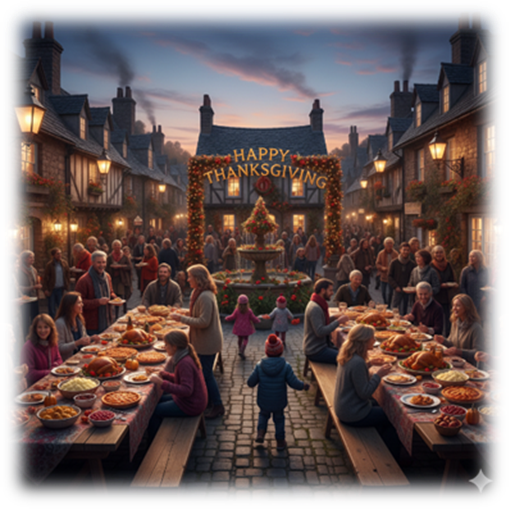
The square itself was already transformed. Wooden tables groaned with food: golden turkeys carved beside steaming bowls of venison stew, cranberry compote gleaming like rubies next to platters of spätzle and roasted squash. The air was thick with the scents of cinnamon, nutmeg, chestnuts, and wine warming in copper pots. Lanterns swung from balconies, their soft glow spilling across cobblestones, mingling with candlelight that flickered on every table. Bellecombe had never looked like this before—part Alpine fair, part American harvest, wholly alive.
Monique slipped to his side, a glass of cranberry juice in hand instead of her usual wine. Her gaze swept the square, candlelight catching the curve of her smile. “It is… beautiful,” she said softly, as though surprised by her own sincerity.
The mayor mounted the small stage, Caroline at his side, his baritone rising above the hum of the crowd with words of gratitude and community. Olivier only half-listened. His mother’s attention had drifted to Cesar, standing with Sabine near one of the long tables, their heads tipped close together in easy laughter. “Look at him,” she murmured. “I have never seen your uncle so content. Every thread finds its place, it seems.” Her gaze shifted deliberately to Olivier. “Perhaps even this one.”
He kept his eyes on the structure above, refusing to give her the satisfaction of a glance—but warmth crept unbidden into his cheeks.
Monique’s mouth curved knowingly. “Shall I fetch a cuff and take your blood pressure?” she teased, tapping her wrist as though indulging the part she played so often.
Olivier shook his head, a huff of laughter escaping him. “No need. If anything, I’ve been steadier. Since she…” He trailed off, then admitted, “Since she landed in my life, I’ve worked with more purpose than I have in years.”
Caroline stepped lightly up to the podium, the mayor guiding her with a hand at her back. She smiled out at the crowd, switching smoothly to English, her Vermont accent carrying warm and clear. Words of gratitude tumbled easily from her, bridging the cultures gathered in Bellecombe’s square.
Beside him, Monique’s voice dropped, no longer festive but edged with worry. “Et elle? Does she feel what you feel?”
Olivier gave her a sidelong glance, dry as stone. “Shall I show you our messages from last night? I warn you—pas très catholique.”
Her eyes widened and she swatted his arm. “Non! Keep your secrets. I said I wished to stay sober, not scarred.”
He chuckled, shaking his head. French families—always circling love with banter, never naming it outright.
On stage, Caroline finished her remarks to warm applause. The mayor turned toward Olivier with a small nod. His cue.
He drew a steadying breath and flipped the switch.
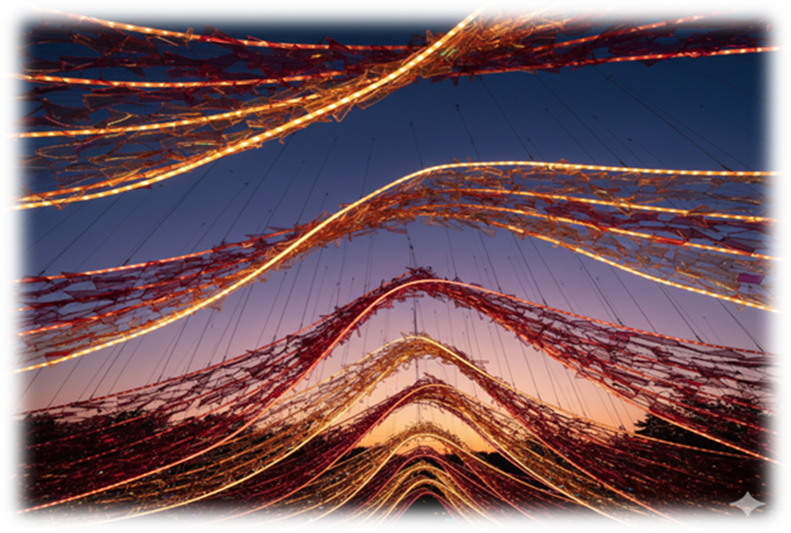
The installation surged to life. Glass and light unfurled above the square in a sweep of color, arcs of brilliance scattering across rooftops, cobblestones, and the faces turned upward. Crimson, amber, and gold rippled together like an aurora trapped in crystal, shifting with each angle, each breath of wind. The entire square was transformed, no longer just Bellecombe but a dreamscape suspended between autumn and starlight.
Gasps rose, followed by cheers, a child’s delighted cry, the clink of wineglasses raised. The town itself seemed to glow.
From across the square, Olivier caught Avery’s face tilted skyward. Her eyes shone, her lips parted in wonder, and when she turned to the people nearest her, her smile broke wide and irrepressible. Pride and joy spilled out of her like light itself—contagious, irresistible. He felt it catch in his own chest, as addictive as the pull of glass to flame.
And in that instant he knew: he couldn’t stay on the edges of her orbit.
He stepped down from the platform, weaving through the crowd, intent on finding her. But when he reached the spot where she had stood, she was gone.
The moment the installation came alive, people surged toward him. Hands clapped his shoulders, voices praised him in French and English alike. “Magnifique!” “Bravo, Monsieur Morel!” He nodded, smiled, offered polite words in return, all the while his eyes combing the square for the one face he wanted. Avery was nowhere in sight.
The last thing he wanted was another round of handshakes and speeches. When Caroline touched his elbow and murmured that the mayor required a word, he swallowed his impatience and let her lead him away from the crowd. But as they cut through the lantern-lit square, he caught the quick flick of Caroline’s eyes toward his mother—and the answering wink. His step faltered. Whatever this was, it wasn’t about the mayor.
They turned a corner, and the festival noise thinned into a muffled hum. Caroline stopped before the bakery, its windows glowing like hearthlight against the night. “Inside,” she said lightly, but there was mischief under the softness. “You’ll find what you’re looking for.”
The bell above the door chimed as he pushed it open.
And then he saw her.
Not the mayor, not more polite words—Avery. Waiting by a small table near the window, set with linen and candles, the golden light catching in her dark curls. She’d shed her coat, and the cream knit of her dress hugged her lightly, elegant yet unpretentious. She looked at him as though she’d been waiting all evening, her eyes shining warmer than the candles.
A rush of something sharp and heady went through him—relief, disbelief, hunger all braided together. He realized, absurdly, that he’d followed Caroline without protest because some part of him had been hoping it would be her.
“I had to see you,” she said, voice low but sure. She gestured toward the spread on the table: delicate pastries, biscotti, even small cakes, each one labeled carefully. “All sugar-free. The baker nearly threw me out for asking, but I insisted.”
Her enthusiasm spilled out unchecked. “Your piece, Olivier—” She broke off, searching for words. “It was… breathtaking. You’re unlike anyone I’ve ever met. Your creativity, your brilliance—it’s singular. Unique.”
Mid-sentence, she flushed. She sat him down quickly, reaching for a plate. “Here. Try this one—it’s made with almond flour and stevia. Perfectly safe.” She pressed a morsel into his hand, explaining as though her knowledge could shield him.
He swallowed it with barely a glance at the plate, his gaze never leaving her. When she reached for another, he caught her wrist gently, his mouth quirking. “After the messages you sent me last night,” he murmured, his voice husky, “you think I crave anything more than a taste of your lips?”
And before she could answer, he drew her in. The kiss was warm, insistent, tasting of candlelight and laughter, of sugar and spice and the faint trace of the mulled wine she’d sipped earlier.
The kiss deepened before either of them could think better of it, urgent and hungry, his hand sliding to her jaw as though anchoring her in place. He kissed like an artist—fierce, consuming, as if he could pour every unsaid word into the press of his mouth.
When he finally drew back, breath unsteady, she stared at him, lips parted. Then, true to form, she blurted, “Wow. Your kiss is like your looks.”
His brows arched, eyes glinting. “Drop-dead gorgeous?”
She let out a shaky laugh. “Dangerous. Impossible to forget.” And then she pulled him back to her, kissing him again.
He sat deeper in the seat, tugging her effortlessly onto his lap, and the kiss unraveled into something wilder—her fingers tangled in his hair, his mouth tracing fire along the line of her throat. The candles flickered, forgotten, as if the whole world had shrunk to this table, this moment.
Until she broke away, her breath ragged, eyes clouded with something heavier than desire. “Olivier, what are we doing? My mission here is done. My boss expects me back in New York tomorrow. If we… if we take this any further, how could I ever leave you?”
He caught her gaze, unflinching. “You don’t have to leave me. Take me with you. You don’t even need to check me in—Business class allows more baggage, remember?” His mouth brushed her neck, teasing, a smile against her skin.
She pushed him back just enough to meet his eyes. “Take you with me? Where—New York?”
He grinned, unabashed. “To my place in New York.”
Her breath caught. “Your place?”
“Yes. That’s how we ended up in the plane together. I bought a loft in SoHo three years ago. The atelier below it as well.” His tone softened, an undertone of honesty beneath the banter. “I needed space from … family drama.”
She blinked, still absorbing. “You’re a New Yorker?”
“Can’t you tell by the accent?” His smile tilted, wicked and warm at once.
Avery smiled, wide and unguarded, every worry dissolving in the heat of the moment. True to her boldness, she stood, tugged him up with her, and without hesitation led him toward the door.
“Then why waste time? I really need to be with you alone. My hotel is two blocks away.”
Olivier laughed and followed.
“Is the piece called Rêverie after all?” she asked as they stepped into the cool night, her hand laced with his.
“No, now I’m thinking of calling it savoury. Spelled SAvery. Think of … delectable salvation.” He twisted a curl of her hair around his index finger. “And you.”
She looked at him incredulous. “You’re joking.”
“I never joke about my art.” His voice dropped, rich and serious, as he pressed his lips on her mouth then drew her with him.
The square glittered around them, still alive with laughter, clinking glasses, the golden wash of lanterns and the breathtaking shimmer of glass and light above. Joy rippled through Bellecombe like a current, weaving strangers into community, turning tradition into something new.
Together they moved, hand in hand, like two currents crossing—her magnetic power to fuel what mattered, his uncompromising gift for insight.
Neither the town nor the festival could contain what had sparked between them—only the wide horizon of what lay ahead.

Author’s note:
The images in this post are AI-generated — visual companions meant to bring the story to life (character consistency isn’t always 100%).
I hope you enjoyed Casting Light as much as I loved bringing Avery and Olivier’s story to life. From a Human Design lens, these two are a mesmerizing blend of contrast and complement. Avery’s 3/5 Emotional Manifesting Generator energy (with her Sun in Gate 14, the keeper of direction and empowered resources) meets Olivier’s 1/3 Sacral Generator groundedness and inner knowing (with his Sun in Gate 43, the gate of sudden insight). Together, they form a dynamic where her capacity to respond with bold, creative momentum is steadied — and sometimes challenged — by his deep, intuitive clarity.

For Christmas, we’ll be moving to Bethlehem, Pennsylvania, a quiet town wrapped in snow and old stories waiting to be retold.
Meet Nora Bennett, a teacher who follows her inner compass after a painful divorce, and her daughter Ellie, whose bright, intuitive nature sees what others overlook. On Wray Hill, she’ll meet Samuel Wray a reclusive writer who’s been hiding from the world for years, a man whose carefully guarded silence is about to be interrupted by two people who never meant to find him.
This December tale is about second chances, unexpected warmth, and how the right people can restore faith where we thought it was lost.
Nora embodies the adaptive flow of a 3/5 Manifesting Generator with a defined G center—resourceful, intuitive, and guided by an inner compass that rarely points her wrong. Her open Solar Plexus keeps her calm in the storms of life, even when she’s rebuilding everything from the ground up. Samuel, meanwhile, carries the introspective weight of a 6/3 Emotional Manifesting Generator—once thrown into life’s chaos, now perched in quiet observation, his defined Solar Plexus moving in deep, tidal waves. Together, they bridge each other’s gaps: her steady presence softens his emotional surges, and his hard-won wisdom gives her experiments meaning. Their connection shows how direction meets depth when two very different designs cross paths at just the right time.
If you’d like to receive the Xmas story right to your inbox as soon as it’s posted, click below.


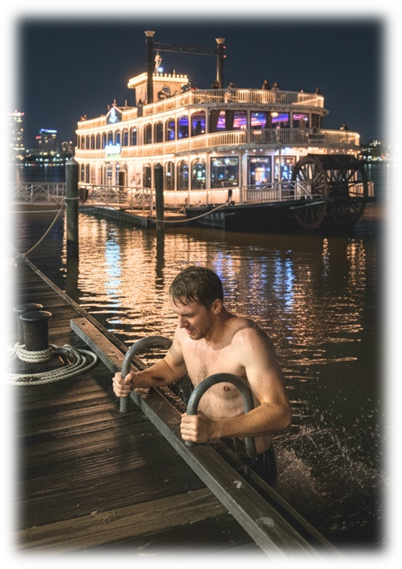



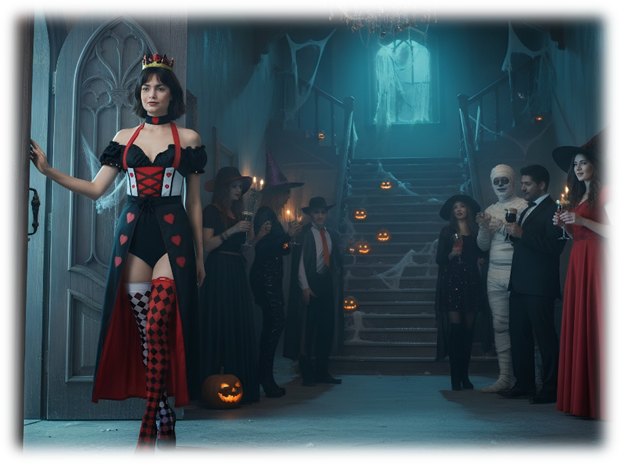



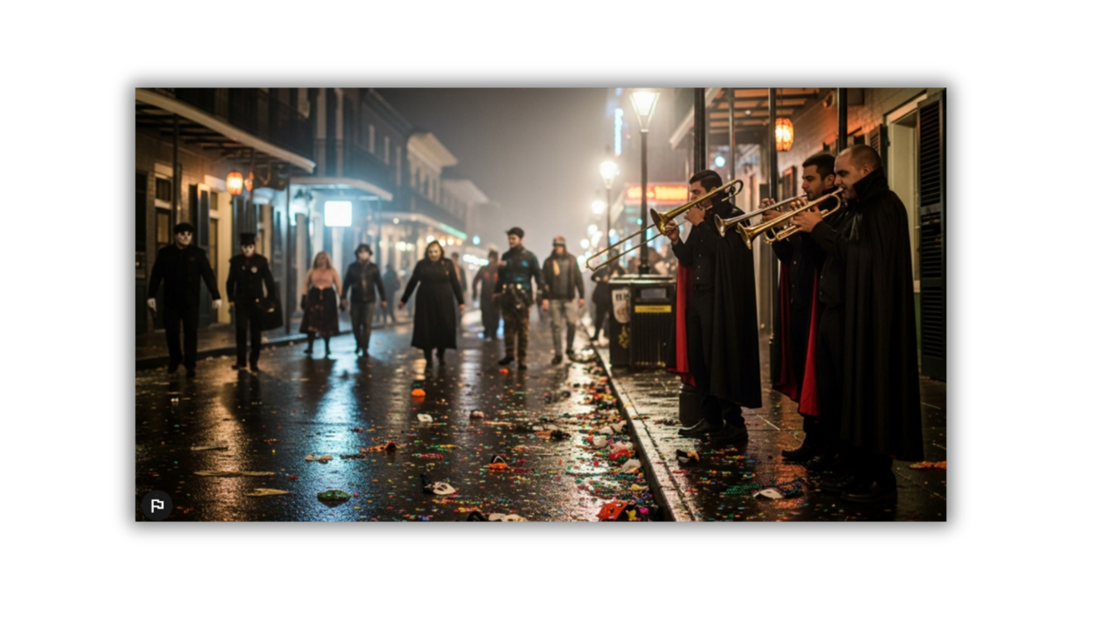

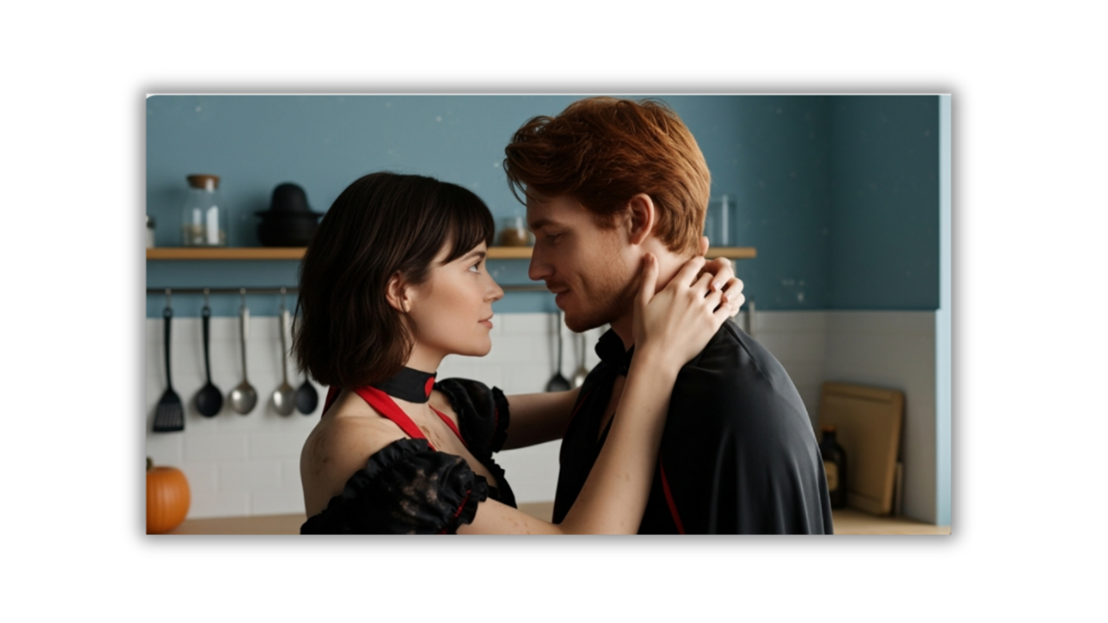




 Beyond the Mind Maze