Category: Wip: Where How and Then What

  • Terry Tyler – WIP Interview

    Terry Tyler is an award-winning author, writer and blogger and also blogs for the UK Arts Directory. She has seven novels and a collection of short stories on Amazon.  Terry writes in the genres of contemporary women’s fiction/romantic suspense; her latest book is called Kings and Queens, and is a modern day take on the story of Henry VIII and his six wives (a two-digit perfect 5* score so far!).  A sequel will be started soon!

    Fun fact: I started things with Terry on the wrong foot! Her Twitter bio says that she’s into gangster stuff, and in my “thanks for the follow” tweet I wrote “gangsta stuff”! Terry politely pointed out that those are two different things, and then, for a while, I kept calling her “Tyler” instead of Terry! I’m lucky she was still interested in doing the interview! 🙂

    Terry, it’s a pleasure having you here. Apart from your amazing writing credentials, we would like to get to know you a bit better. Could you tell us a few things about yourself?

    I live in the north east of England with my husband.   I don’t have a great deal to tell you as I mostly live a pretty quiet life these days; I’ve had loads of different jobs (including having my own shop for 4 years, working in a psychiatric hospital, running a deli, all sorts!) and have lived in many different places with all sorts of people but am now happy just stay at home with my husband and write, mostly.  We like to hibernate!  I enjoy going out to the countryside and seaside, and visiting  places of historical interest, too.

    Exercise in lean writing: give us a synopsis of your current WIP in under 200 words.

    Round and Round is a novella of about 30K words.

    Sophie Heron’s fortieth birthday is looming, and she is depressed about her job, her relationship, her whole life, especially since her partner, Chris, has developed an interest in which she definitely doesn’t want to get involved….

    Fifteen years before, she had the choice of four men, and can’t help wondering how her life might have turned out if she’d chosen one of the others.

    Sophie’s beloved Aunt Flick died in 2001.   Sophie felt closer to her than anyone; kind, intuitive and rather unconventional Auntie Flick was her best friend and agony aunt.  The two of them had a special place, a tree by a river, where they would go together; when she was a child, Sophie called it the Angel Tree.  Now, she visits this idyllic spot whenever she wants to feel close to Auntie Flick, who said she would always take care of her.  She often senses her aunt there, waiting for her, under the Angel Tree

    As Sophie’s fortieth birthday draws near, she calls on Auntie Flick to show her the way forward ~ and help her look back into the past so that she can see what might have been….

    Heart-warming and inspiring! Are you happy with the pace of your work? Do you aim at a specific word count each day?

    I am happy with it, yes, I just wish that other things didn’t get in the way, sometimes!  Me and every other writer, I should think.  I don’t aim at a specific word count each day, because motivation is never a problem.  I spend as much time editing and re-writing as I do on the first draft, during which, of course, word count isn’t so relevant.

    What’s your worst enemy in getting that first draft finished?

    Tiredness!  I stop writing, with reluctance, when I’m tired, because I know I won’t produce my best work.  When I start to get a headache and sandpaper eyes I know it’s time to pack it in for the day!

    I can so relate to that! Could we take a look at your workspace? Is there a particular place you find inspiring?  I always write in the same place, at my desk against a blank wall!

    Thanks for including yourself in the picture! Now your photo is “pinned” on my Featured Writers’ Workspace Board on Pinterest. That’s one thing we have in common. I also need a blank canvas before me so that those images will conjure… Oh, the darn reading glasses too! 🙂 Apart from Word and Google, do you use any other writing or research tools and apps?

    Um…. yes, books…!!  If I need to do a lot of research for a novel, I read a lot.   I use Google for one-off facts, though, like everyone does.  I didn’t know there were any other writing tools and apps!

    How do you intend to celebrate writing “The End” on your draft?

    I may smile, and tell my husband… that’s about it, though!  I’ve written about 17 novels over the years, so it’s not a particularly momentous moment, especially as I then go back to the beginning and start all over again with the first rewrite!  I usually leave that for a few days, though.

    Which book publishing processes are you going to outsource and which are you confident enough to undertake yourself?

    I always edit all my own work; I couldn’t let anyone do that!  I feel pretty confident about it now, and can see what’s superfluous, what doesn’t flow right, what needs a bit more detail, etc.  All writers need an independent proofreader – mine says she finds between 300 and 800errors in the average, well written novel.  My worst thing is missing words – honestly, my proofreader (@ProofreadJulia on Twitter, the best!) finds about 300 per novel in mine! Someone else does my covers and formatting for Kindle, too.

    Being confident enough to do your own editing? I bet it takes seventeen books and excellent intuition! Do you have any marketing tips or favorite promotional sites you’d like to share?

    Ooh, far too big a subject for an interview answer!  This might help, though: follow @BadRedheadMedia and @RachelintheOC on Twitter, and read her blog posts; in fact, read any blog posts you find on the subject, including mine on my blog on UK Arts Directory.  In short: be prepared to spend a fair bit of time on promotion if you want to succeed, don’t rush to publish your first book before it’s ready, as if people don’t like it they won’t buy another by you , do plenty of research before paying money for advertising so you don’t get ripped off, always get your work properly proofread (I suggest Julia, or @wendyproof) and realise that securing a regular readership is a long process – it might take longer than a few months!

    Actually, it was through your UK Arts Directory posts I connected with you! Very insightful! Is contemporary/women’s fiction the genre you will settle in, or do you see yourself branching out in the future?

    I have never decided on a genre, I just write the story I want to write.  I don’t think about genre when I start a novel, I worry about that later.  Inadvisable, so they tell me!  One of my books, Dream On, is a bit ‘lad lit’, and has never sold as well as the others.  It’s got the best review average of all my books, but I think the fact that it starts off with some guys in a rock band alienated some of my readers who were used to me writing more about female relationships.  I stay more women orientated now!  Kings and Queens has an historical element to it, and Round and Round has a hint of the paranormal, but they’re all instantly identifiable as my books.  I think it’s best to stay in roughly the same genre, because your readers want to know what to expect.

    Would you like to share with us links where we can find you and your work? 

    I’d be delighted!  Please see links below:

    Amazon UK Author Page:

    Opera – [Amazon.co.uk: Terry Tyler: Books, Biogs, Audiobooks, Discussions]

    Amazon.com Author Page

    Opera – [Amazon.com: Terry Tyler: Books, Biography, Blog, Audiobooks, Kindle]

    My Personal Blog

    Opera – [Terry Tyler’s Blog]

    My UK Arts Directory Blog (about self-publishing)

    Opera – [Terry Tyler Blog — UK Arts Directory]

    Thank you, Terry, and best of luck with Kings and Queens!

    Thank YOU, Maria, for asking me to appear on your lovely blog!

  • Nat Russo – WIP interview

    Before I introduce Nat Russo to you, I’d like to point out that Nat was the very first writer I followed back in November when I started my author platform, and the first one to answer my newbie questions. Although he was not published then, I was humbled by how accessible he was even though he already had over 30,000 Twitter followers (almost doubled now).

    Six months later…

    Nat Russo is the bestselling author of “Necromancer Awakening”, the first installment of a series titled “The Mukhtaar Chronicles”. Since its release on April 9, 2014, “Necromancer Awakening” has shot up the bestseller lists, making its way to the top 5 on Amazon’s Dark Fantasy Bestseller list, top 5 on Amazon’s Sword and Sorcery Bestseller list, top 5 on Amazon’s Metaphysical Fantasy Bestseller list, and top 50 on Amazon’s Horror Bestseller list. 

    Nat mentors up-and-coming writers around the world through his popular Twitter feed, as well as a blog dedicated to learning and improving the craft of writing.

    Nat, thank you for coming and congratulations on your Necromancer’s success! Tell us more about your life outside writing.

    I’m a software engineer by day and a fantasy writer by night. I was born in New York City, raised in Arizona, and I’ve lived just about everywhere in between. Though I’m now married with a family of my own, I once studied to be a Catholic priest in a Benedictine monastery for several years. This gave me a deep, abiding love of Philosophy and Theology, both of which are expressed in various ways in my work. My Bachelor’s degree, in fact, is in Philosophy.

    My seminary days were not all bright. Before I had the great privilege of studying under the Benedictine monks, I had the misfortune of experiencing life in a religious order called The Legionaries of Christ. I witnessed extreme abuses of religious authority during my time with them, and this too is expressed in my work. I tend to write about the consequences and implications of allowing either Faith or Reason to overshadow the other, and the problems inherent in considering any person “Holy”.

    Can you give us an idea on your current WIP?

    I’m currently working on the sequel to “Necromancer Awakening”, titled “Necromancer Falling”. I’m in the story-boarding stage of this project, and I’m very happy with the direction it’s going. I’ll be introducing two new key characters that I’m extremely excited about. Readers of “Necromancer Awakening” will tell you the Three Kingdoms aren’t out of danger yet, and “Necromancer Falling” makes that painfully clear. This isn’t the “happy ending” fantasy tale that many people are accustomed to, as I’m sure you inferred from the title.

    In addition to “Necromancer Falling”, I’m currently in the first-draft phase of “The Road to Dar Rodon”, which is a short story set in the “Necromancer Awakening” universe. You don’t have to read “Necromancer Awakening” to appreciate this story, however. But, if you have read the book, you’ll probably find some “Easter eggs” in the short story that will amuse you.

    That will be a treat for your fans! Are you happy with the pace of your work? Do you aim at a specific word count each day?

    I’ve learned not to beat myself up too much. There are days when the work flows from my fingertips, and days when I sit staring at the screen. I believe both types of days are valuable. It often takes the subconscious a while to percolate over a problem. If I force it, then I usually end up with sub-par work that I have to rewrite anyway. When I have those days, I step away from the keyboard and take my mind off it. I’ve found that when I return to the keyboard after a break, the words flow once more.

    I’ve tried setting word count goals for myself on a daily basis, but I quickly abandoned that. It works for many writers, but any number I came up with just seemed rather arbitrary to me. So rather than specify a specific count, I just follow the spirit in which word count goals were created: try to write every day.

    Plotter, pantser or both?

    Definitely both. I begin every novel-length work with a detailed outline that includes scene descriptions. These scene descriptions, however, are little more than a scene goal, an outcome, and the POV in which the scene will be written. I create a story framework (usually some variation on Three Act Structure/7-point Story Structure) and stick to that pretty rigorously.

    However, when it comes time to write the actual prose, I go into “discovery writing” mode. I have little more than the scene description, and maybe one or two key events/quotes per scene that I know I want to include. I use my story framework to help me steer the improvisational writing that takes place when I’m actually writing the story.

    What’s your worst enemy in getting that first draft finished?

    I spend too much time questioning myself and trying to “get it right”. One lesson I’ve learned: I’ll never be 100% satisfied with my work, so I don’t strive for perfection anymore. Instead, I strive to be the best I can right now. I’ll always improve, but I haven’t yet learned the lessons that will elevate my craft to that hypothetical future state, so I had to learn to stop beating myself up and just finish the draft.

    The first one million words are the hardest, they say… Have you experienced “writer’s block” and how do you overcome it?

    I have, and I found several different ways to approach the problem. When I’m struggling over where to go next in a story, I’ve found the best way to solve an immediate problem is to inject tension and conflict. One way I do this is through the “Yes, but… / No, and…” principle. Every scene has a goal, and every scene goal has an outcome. For the vast majority of a story, the protagonist shouldn’t be succeeding. Or, if they succeed, it should come at a price. When I write a scene goal on my virtual scene “cards”, I follow it with this question: “Success?” The answer to that question is always either “Yes, but…” or “No, and…” In other words, “Yes, but the price of success is…” or “No, and the situation is even worse than they thought.” As long as I set the main character back, I’m on the right track. Until the end, of course.

    In some cases, I learned that writer’s block can occur when my subconscious mind is still working on a problem. When that happens, the best thing I can do is get out of its way and let it do its job. Sometimes this means taking a short break (a day or more). After these short breaks, the block is usually gone.

    Could we take a look at your workspace? Is there a particular place you find inspiring?

    The answer to the question “What do I find inspiring about this space?” has two answers. First, I’ll give you the literary answer. My characters are nearly always in a position where success or failure is based on how well they can grasp and hold onto the things that matter most in life. My writing space is the main living room in my house. This is where my family “hangs out”. There’s always activity, whether someone is cooking in the adjacent kitchen, or watching television. Family life is what matters most to me, and I find it inspiring.

    Now the pragmatic answer: My office has been taken over by my 13-year old son, and between his computer and musical instruments, there’s no space left for me! Also, Toby [seen in the picture] has very strict requirements for a work space. He needs his papasan chair or he gets writer’s block.

    Toby is the second canine featured in a workspace! He’ll now keep company to Wallace, Marjory McGinn’s partner in writing, in my Featured Writers’ Workspace Board. Apart from Word and Google, do you use any other writing or research tools and apps?

    I avoid Word like the plague. I had used it for many years until another writer introduced me to Scrivener. I’ve used Scrivener for about a year and a half now, and I’m a devout convert. It’s written by writers, for writers. And best of all, it stays out of your way. When I used Word, it seemed as if every day was a battle with my own tools. Making the switch was a freeing experience.

    Aside from Scrivener, I use Scapple (by the makers of Scrivener) to quickly jot notes and make connections between ideas. I’ve only started using this, though, so the jury is out on whether I’ll continue. So far so good, though.

    I use Campaign Cartographer 3 to produce high quality maps. As a Fantasy author, maps are essential.

    I also use a web service called IFTTT (“If This Then That”). This service allows me to send a quick email to myself, and, based on a rule set that I specify, it will append story ideas to a Google Drive document. This way, if an idea strikes me when I’m nowhere near a notepad or computer, I can send a quick email to myself with my phone and know that my idea will be recorded in a central location on Google Drive.

    Lots of solutions for writers there! Thanks for sharing! How do you intend to celebrate writing “The End” on your draft?

    I usually celebrate by immediately plunging in to plotting future work. If I do non-creative things, I find my mind drifting back to the work I just finished, which doesn’t allow me to get the sort of distance from the work that I need in order to go back for the first read-through. By starting follow-up work, however, I’m exercising the same creative muscles, so they don’t have time to grapple with the work I just set aside.

    Which book publishing processes are you going to outsource and which are you confident enough to undertake yourself?

    I’ve outsourced cover design, and I highly recommend this to other authors. Unless you’re a professional designer, you’re just not going to produce professional-quality covers. I’ve seen too many writers get this wrong to not call in a professional for my own cover.

    Had I not been working with various beta readers for more than 2 years on this project, I would have also outsourced the editing. I didn’t do that this time around, but I have a high level of confidence because of how much revision it has been through, as well as my own personal skill sets (I had a professional editor tell me that in 20 years of publishing it was the cleanest manuscript he’d ever seen come across his desk). Time will tell, I suppose. I may outsource the next just to get a handle on what the experience is like and whether it is necessary. But I’ve seen many “professionally edited” self-published books with horrible editing. The sad thing is I know how much they paid to have it done.

    Do you have any marketing tips or favorite promotional sites you’d like to share?

    There’s one truism in publishing: no one knows how to sell books. Sounds funny, but it’s true. The only thing we know for certain is that word-of-mouth sells a book far better than any marketing campaign.

    That being said, self-publishers need to be in it for the long haul. It takes time for a story to find its audience, and there is no magic web site you can use or amount of money you can spend that will change this. I occasionally post marketing materials on Twitter and Facebook, but I don’t believe this is going to have a large impact on book sales (and I recommend keeping these to a bare minimum!).

    My advice to self-publishers is this: be a contributor. Be a content provider, first and foremost, and people will seek out your fiction. As my blog (which focuses on the craft of writing) began to take off, people started asking me where they could find my books. Give people something of value and they will want more of you.

    That’s the advice I keep reading from many, but it looks like only a few heed it. Is fantasy the genre you will brand yourself with or do you see yourself branching out in the future?

    Fantasy is a great comfort zone of mine. I’ve always gravitated toward it in both reading and writing. In fact, Fantasy is the primary reason I became an avid reader to begin with. However, Fantasy and Science Fiction are cut from the same cloth. Both accomplish the same thing: each conveys a set of truths about the world. Fantasy conveys these truths through a world that will never be possible. Science Fiction conveys these truths through a world that simply isn’t possible yet. I consider myself a Speculative Fiction author, and I can see myself writing Science Fiction in the future as well as Fantasy.

    Would you like to share with us links where we can find you and your work?

    My bestselling novel, Necromancer Awakening, was published on April 09, 2014, in digital and print editions through Amazon and CreateSpace. If you’re interested, you can read some of it and/or buy a copy here: http://www.amazon.com/dp/B00JLVOU0U/

    Some other places you can find me…

    Blog: http://www.nat-russo.com

    Twitter: http://www.twitter.com/NatRusso

    Facebook: http://www.facebook.com/NatRussoAuthor

    Google+: http://bit.ly/1gceCpf

    Pinterest: http://www.pinterest.com/NatRussoAuthor/

    Thank you, Nat, and best of luck with your Necromancer Falling and The Road to Dar Rodon!


  • C.H. Little – WIP Interview

    C. H. Little is the author of “Escape”, a gripping thriller novella set on the exotic island of Menorca, Spain. “Gripping” is not a random promo word; I’ve read “Escape”, thoroughly enjoyed it, and that was my review’s key word. I am, therefore, very pleased that C. H. Little has agreed to be featured in my interview column, as we’d like to know more about herself and her work process.

    Clare, thank you for coming. As a warm up, why don’t you tell us a few things about yourself?

    Well I’m a teacher of English Language and Literature in the North West of England, but have been writing for the past year. My teaching job can be demanding, but I love the challenge of inspiring young people, especially to read and explore new books. I run a creative writing club at school and really enjoy reading the poems and stories that the teenagers I work with create, as well as writing fiction myself in any spare time I have. I am married with two wonderful children who keep me incredibly busy. I have always loved writing, but never created anything really sustained until I wrote and self-published my romantic thriller novella, called Escape, last year. I’m hooked now, and currently working on its sequel.

    Exercise in lean writing: give us a synopsis of your current WIP in under 200 words.

    As I said, it’s a sequel to my thriller novella Escape. It follows a British woman called Kate Morgan as she searches for her missing sister Penny, the central character from the first book. Kate arrives on the beautiful island of Menorca, where Penny was holidaying alone, and begins to try and discover what has happened to her sister. With the assistance of the frustrating Olly, Kate finds that prior to going missing, Penny had been spending time with a mysterious couple who have also since disappeared.  At the same time, a woman is abducted from elsewhere on the island and readers begin to fear for the safety of Penny, and eventually Kate herself.

    I can’t wait to read the sequel! Are you happy with the pace of your work? Do you aim at a specific word count each day?

    I’m generally fairly unhappy with the pace of my work! On a good day I can write a large amount in quite a short time (not always publish-worthy material though!) I usually write in the two days per week when I am not at work teaching and my daughter is at nursery. This gives me around four and a half hours a week to write. What frustrates me is the fact that I can’t currently fit any more writing time than this into my schedule. So in a good week I can manage around 4,000 words, but if I had more hours in which to write, my sequel would be ready far faster!

    Plotter, pantser or both?

    I have tried both with varying degrees of success. I plotted out an entire 60 chapter novel once, and have written 15 chapters of it, but found the entire task so daunting that I put it to one side (one day I WILL finish it). However, my WIP has more than one point of view in its narrative and therefore required quite a bit of plotting. I started without doing this and had to go back and create a clear plan of how the alternating narrative worked, which took me quite a bit of time. Even when I plan my writing quite carefully though, I find the most exciting part is when a character or event takes on a life of its own. Often things happen which I had not planned on happening at all, for example a character who began as simply a bystander in Escape, ended up getting romantically involved with the heroine!

    What’s your worst enemy in getting that first draft finished?

    Time: see my earlier response! I try not to complain, but life is pretty busy and multi-tasking is a must if I’m going to get Escape’s sequel written sooner rather than later.

    Have you experienced “writer’s block” and how do you overcome it?

    Yes, most definitely. I have good days and bad days when writing. Sometimes the story takes care of itself, flowing from pen (make that keyboard) to page with ease, but other times I really don’t know what’s coming next. At that point I try and write another section of the story to re-inspire myself, which I can link up to later, or I go back to my plan and work out where I’m supposed to be up to. Sometimes missing out a chunk and jumping ahead in the story, or writing a scene from a different character’s perspective, really helps me to refocus. Of course, a good old cup of tea often helps too!

    Yes, tea is an “enabler” and not only for the English! Could we take a look at your workspace? Is there a particular place you find inspiring?

    I usually write in our dining room at home, obviously not when we’re eating in there! It’s a lovely space which overlooks the garden and is usually warm and peaceful. The sun is in the garden for most of the day so on a nice day (fairly rare, but we do have them occasionally!) the room feels really cosy and light.
     Now your photo is “pinned” on my Featured Writers’ Workspace Board on Pinterest. A very tranquil ambience there! Apart from Word and Google, do you use any other writing or research tools and apps?

    I use Thesaurus.com all the time, especially when I’m finding myself using the same vocabulary over and over. Dictionary.com is also useful, and since I set my novella in Spain I have used Google Translate to look up the odd Spanish word or phrase. I have regularly used Google to search the net for authentic Spanish names for any new characters. Google maps has proved similarly useful for providing real story locations on the island of Menorca.

    If you use Thesaurus.com, you can imagine how useful it is to me, as English is not my mother tongue! How do you intend to celebrate writing “The End” on your draft?

    Well I’ve only done it once so far and I think I was so surprised that I’d managed it, I forgot to properly celebrate! I think this time I’ll have a large glass of something fizzy with my husband and put off the editing until tomorrow!

    Sounds great! Which book publishing processes are you going to outsource and which are you confident enough to undertake yourself?

    I’m quite proud to say that Escape was all done from home. I edited it myself with help from a number of pre-readers (mostly family members, which is not always a good idea as they’re obviously quite biased!) With the sequel I’m planning to recruit a far wider set of proper beta readers in addition to my family. I was happy, however, that Escape was grammatically accurate when it was published. (I have only had one person tell me of an error which, with Amazon KDP being what it is, was fixed very rapidly!)

    My husband is a computer programmer but also very talented in most things technical, so he helped me enormously. He formatted the novella, set me up with a range of social media links to help promote my book, designed a website for me and even created the book’s cover, which I sometimes think has had more compliments than the book itself! Great, considering he isn’t a graphic designer by trade!

    I’ve said this time and again: the cover of Escape is amazing! I truly can’t imagine a better combination for an indie author: an English teacher with a tech-savvy husband. Lucky you! Do you have any marketing tips or favorite promotional sites you’d like to share?

    I’m still getting to grips with social media to be honest, but I’m probably most at home on Twitter. I have a Facebook page and a Goodreads account, but currently struggle to find the time to really exploit these sites successfully to promote my books. Twitter seems to allow you contact with or exposure to a large amount of people with not too much time investment required (140 characters can be created pretty quickly). I really like Twitter now I’ve become more comfortable with the way it works.

    I’d also recommend Buffer, which allows me to stock up new Tweets in preparation for days when I’m at work and know I won’t have time to create any. The first level of Buffer is free and allows you to store up to ten Tweets (as well as ten separate Facebook posts), which takes you over two days. It publishes one Tweet every four hours or so throughout the day, spacing them out and therefore maximizing the amount of people who see them, taking into consideration the time differences between Europe and the States, for example.

    Setting up a Twitter scheduling service is in my immediate plans as well. Is “thriller” the genre you will brand yourself with or do you see yourself branching out in the future?

    No, I think I’m still finding my genre. I have enjoyed writing in the thriller genre but have also had comments that my writing could partly qualify as “chick-lit”. As a teacher of young people I am also considering writing for Young Adults, and as I love dystopian fiction myself I would love to have a go at creating some kind of dystopian world at some point in the future. Watch this space!

    Would you like to share with us links where we can find you and your work?

    Escape on Amazon US

    Escape on Amazon UK

    Site: www.chlittle.com

    Twitter: @chlittleauthor

    Facebook: facebook.com/chlittleauthor


    Thank you, Clare, you and best of luck with the sequel to Escape!

  • Marjory McGinn – WIP interview

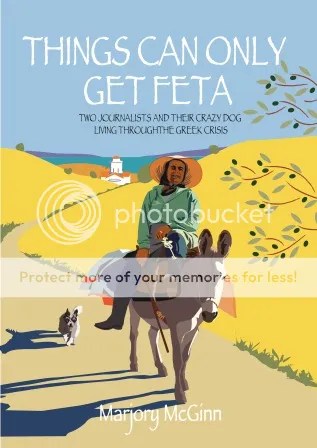
    This week’s Q&A features Marjory McGinn, a Scottish-born journalist whose three years in the wild Mani region in southern Peloponnese during the economic crisis led to Things Can Only Get Feta, an inspiring travel memoir. Marjory’s love affair with Greece actually started in Australia through her friendship with Anna, a Greek girl, and continues to this day. As a Greek in love with my own country, shouldn’t I be super excited to have a chat with Marjory about her life and her work?

    After you read the Q&A, make sure you come back up here to link to MM Jaye’s Friends Write (my other blog) for a hilarious excerpt from Things Can Only Get Feta.

    Marjory welcome to my blog. We’d love to know a bit more about you and your interesting life.

    I think I’d describe myself as a fairly restless spirit who likes new experiences and challenges and that probably started as a child when my family migrated from Scotland to Australia where I was brought up. Aussies are adventurous and free-spirited and I am sure a lot of that rubbed off on me. As soon as kids leave school there, they tend to go on a big overseas trip which I did, too. I ended up in Athens teaching English for a year which is one of the reasons I developed a life-long love of Greece.

    Back in Australia, I started my career as a journalist on Sydney newspapers and I specialised in arts stories and celebrity profiles. Later I moved back to Scotland with my partner Jim and worked as a freelance feature writer for a few years before the travel bug hit again. In 2010, during a British recession, we decided to have an adventure in the remote Mani region of the southern Peloponnese, which inspired my non-fiction book Things Can Only Get Feta. We took our crazy terrier dog Wallace along as well and that certainly guaranteed a few memorable incidents.

    Could you give us an idea of what your current project involves?

    I am currently writing a kind of sequel to the first book, which was about our first year living in a hillside village in the Mani in 2010/11. We ended up staying in this region for three years, so the sequel charts the final two years with a nearby, but slightly different, location and many more adventures and dramas as the economic crisis intensified, and a few other elements as well.

    That should make a very interesting read! Are you happy with the pace of your work? Do you aim for a specific word count each day?

    We are in the southern Peloponnese again for a shorter adventure this time. I had already started the second book while back in Scotland and I am now slowly getting back into it again. When you’re writing a book about Greece, it helps to be here for sheer inspiration: olive trees, birds, the sea in the distance. I am very laid-back about word counts and don’t set a daily amount because once I am in the mood I can write fairly quickly.

    Plotter, pantser or both?

    Probably both. A non-fiction book needs a certain structure of course since it’s based on fact, but the rest of my book is narrative and involves experiences and the people I’ve met and I like that to be more unstructured, to flow just the way it wants to because even with a tight plot, as you know, elements pop into your head unbidden and you just can’t ignore them. A good travel memoir I think should read like a novel but be instructive and truthful at the same time, which is not always an easy thing to carry off.

    What’s your main enemy in getting that first draft finished?

    I think my main enemy here in Greece will be too many lovely distractions in the summer, like going to the beach, especially when it’s too hot to do anything else, and all the paniyiria in the villages in July and August which are always great fun.

    Have you experienced writer’s block and how do you overcome it?

    Having worked as a journalist most of my life, with tight deadlines, I have learnt to deal with blocks. I used to find that when my brain reached a dead end it was best was to walk away from the computer, walk around the newsroom, talk to people, and chill. Sometimes writers can try too hard to express themselves and that causes stress, and a block.  Sitting and staring at a blank screen doesn’t help either, so my second tip is, if you really can’t get going, start writing anything – a shopping list will do, or a daft poem, anything really just to get words on the screen/page. Before long the piece you’re supposed to be writing will come to you. The trick is to get a flow going.

    That indeed is an excellent tip! Could we take a look at your workspace?

    My workspace at the moment is the balcony on the house we are renting for the time being. It has a fantastic view over olive groves to Koroni harbour at the tip of the Messinian peninsula. I have my laptop on the balcony table, a few books and nothing much else. Probably the tidiest office I’ve had for a while. It’s so peaceful here that I can’t fail to be inspired to write but I find it’s best to do it early, or later in the afternoon because the blue sea keeps calling me away. The only other problem is that our dog Wallace keeps stealing my chair and wants to know what I’m writing about him this time!

    Wallace is plain adorable! I’m sure many readers will envy your view. Now your photo is “pinned” on my Featured Writers’ Workspace Board on Pinterest. How do you intent to celebrate writing “The End” on your first draft?

    I think I’ll be rushing down to the sea for a long swim and later a nice meal in one of the lovely tavernas that line the harbour front in Koroni and a nice jug of local wine of course. Bliss!

    Idyllic. Which editing process are you going to outsource and which are you confident enough to undertake yourself?

    I didn’t outsource anything the first time, apart from the manuscript being thoroughly edited by my publisher Bene Factum Publishing (www.bene-factum.co.uk) in London. I did get my partner Jim to read my manuscript several times before sending it to the publisher. Jim is also a journalist with great editing skills and I trust him absolutely with editing and rewrites when needed. He now has his own editing business for Indy authors and if I am allowed to share it with you, the website is www.ebooklover.co.uk

    That’s one of the main points of this column; sharing and promoting services useful for indie authors. Which social media are you more involved with and why?

    I favour Facebook and Twitter mainly. My publisher is a small independent publisher and although he has done an excellent job in marketing and promoting the book, I think these days it’s a good idea for authors to do some of the promotional work themselves if they can. I think it is expected really, so I put regular posts on my FB author page and some on my personal page as well. I also use Twitter a lot. It’s fun and I think it works better for writers and gets your message out to a lot more people that you didn’t previously know. The great thing about social media now is that apart from making new friends, writers can connect with a lot of other writers and the possibilities for promotion are endless.

    Is writing travel memoirs the genre you will brand yourself with?

    I have enjoyed this genre and it has been very satisfying writing about Greece, a subject close to my heart and I’m happy to say a lot of Greeks contacted me after the first book came out last year to say it was a positive story about Greece during the crisis and that means a lot to me. But after writing a second travel book, I think I’d like to try a novel this time. I already have a plot roughed out in my head and I think I will enjoy fiction this time and really letting my imagination take flight.

    Where can we find out more about you and your work.

    I have a website called Big Fat Greek Odyssey which was started when Jim and I went to Greece in 2010 with information about Greece and the book and where to buy it. I also write a regular blog there with a Greek theme.

    http://www.bigfatgreekodyssey.com

    My FB author page is http://www.facebook.com/ThingsCanOnlyGetFeta

    and my personal page is http://www.facebook.com/marjory.mcginn

    you can find me on Twitter @fatgreekodyssey

    Things Can Only Get Feta is available on Amazon in the UK

    And from May 1 the book is available on Amazon in North America

    The book is also available at Barnes and Noble in America

    and Longitude Books

    and in Greece at Evripidis bookstore in north Athens and through the Public website

    For more details on where to buy the book visit http://www.bigfatgreekodyssey.com/greek-book.html

    Thank you, Marjory! Getting to know you and your work has been a pleasure!

    Thanks Maria for this great opportunity to talk to you about my work, and good luck with your own as well. x


  • Effrosyni Moschoudi – WIP interview

    frosso pic1 (1)In this week’s WIP interview, I’m more than pleased to welcome author Effrosyni Moschoudi, as the timing is perfect to share exciting news: “The Lady of the Pier: The Ebb“, Effrosyni’s upcoming paranormal summer romance, has cleared Round 2 in Amazon’s Breakthrough Novel Award contest and is now a quarter-finalist! And that’s on top of “The Necklace of Goddess Athena”, her debut fantasy novel, reaching Amazon’s #1 in Mythology and #2 in Fairy Tales! What a ride for an amazing new author!

    For an excerpt of the ABNA quarter-finalist, “The Lady of the Pier: The Ebb”, click here to go to my excerpts’ blog where my writer friends’ work is displayed better.

    Effrosyni, first of all, congratulations! Having read both of your novels, I must say it’s an honour well deserved. I’m sure my readers would love to know more about you. Could you tell us a few things about yourself?

    My pleasure! I was born and brought up in Athens, Greece. I hold a BSc in Computer Science and have worked in various companies for 20 years, mainly providing computer support and customer service. The credit crunch cost me my career but provided me also with the unique opportunity to dedicate extensive time to my writing; a favorite pastime that I’ve enjoyed since childhood. I reside in a quaint seaside town near Athens with my husband Andy. We have our own house there and it’s idyllic. We love the serenity of our surroundings, growing our own vegetables and having the beach so close to home.

    Idyllic, indeed! Could you give us an idea about what your current project involves?

    The Lady of the Pier is a paranormal romance that will be published as a duology. It is set in Brighton (England) in the 1930’s and in Corfu (Greece) in the 1980’s. It is about two girls who have never met but are connected in a mysterious way. As you mentioned, the first part (The Ebb) has made it as a quarter-finalist in the 2014 ABNA contest in the category Romance. A short excerpt is currently available on Amazon for a FREE download. Readers can have their say in the ABNA contest by reading and reviewing the excerpts from all the entries. Your readers are welcome to download the excerpt from my novel here. As I can’t obviously foretell what the outcome of the contest will be, I carry on with my plans as normal for the publication of The Ebb this summer. I have received detailed and extremely helpful feedback from my beta readers and I am currently editing the novel based on their advice. At the same time I am penning the concluding part (The Flow) although this is a very slow process. If all goes well, this will be published by the end of the year too. The Ebb is very close to my heart. Although it is a work of fiction, there are many autobiographical elements as I used to spend my summers at my grandparents’ house in Corfu as a young girl, just like my heroine Sofia in the book. If your readers wish to know more and to see pictures of the locales that inspired the story, they are welcome to read this post on my blog.

    I’m definitely encouraging all of you to use the above link, download and review Effrosyni’s excerpt. Let’s help a new author out! Are you happy with the pace of your work? Do you aim at a specific word count each day?

    No, I am afraid not. Since January, I have developed frozen shoulder and it has gradually allowed me to do less and less. As a result, to say that I am behind schedule with my writing at the moment would be a huge understatement. Luckily, I’m currently making progress with physiotherapy and hope that things will eventually go back to normal in the next few weeks. I’m determined to resume writing The Flow full time again when that happens.

    That’s unfortunate. I hope physio works for you sooner than expected. Are you a plotter, a pantser or both?

    A bit of both and it also depends greatly on what I am writing. If it is a short story, I usually have the whole thing crystal clear in my head before I even sit at my desk. With novels, it depends also whether it requires any research or not. Research occasionally results in changes on the storyline as to accommodate the actual facts. It has happened with the Lady of the Pier. With The Necklace of Goddess Athena, as the story didn’t portray any world events, I was free to change things as I went. There have been a lot of delightful surprises creeping up on me along the way with this novel and I think I enjoy this process better.

    What’s your worst enemy in getting that first draft finished?

    Distractions. I can be pretty disciplined if I decide it’s time to make progress with a book but for example, when it’s 47 degrees Celsius and the sea is shimmering in the distance, it’s hard to commit to writing indoors! Also, when my husband is at home, I find my writing goes out the window. I often make an effort to treat him with elaborate meals and cakes and we wind up watching DVDs lots too. We both love movies and British series and so, often when he is around, the day just flies by without me writing at all.

    Have you experienced “writer’s block” and how do you overcome it?

    Yes, of course I have but I don’t let it bother me. I choose never to chase inspiration with a bat. I accept that some days will be bad for writing so on these days I just let it go and go do something else. Usually the next day it flows effortlessly once again so I don’t get frustrated about it. It just is what it is. On the days when I can’t do any writing, I usually read a book or watch a movie or listen to music. Movies especially that are relevant to what I am writing tend to rouse feelings inside that facilitate the ‘un-blocking’ process – if such a thing indeed exists.

    Could we take a look at your workspace? Is there a particular place you find inspiring?

    I always write at my desk in my tiny study. I favor crammed spaces. I find they feel cozier and safer. I can relax there and let my mind wander. I couldn’t concentrate to write outdoors anywhere or even inside by a window, as I would get distracted. Therefore, my windowless study is the best place for me. I have placed some frames there for inspiration including pictures of The West Pier in Brighton as well as the book cover of my debut novel, The Necklace of Goddess Athena. I don’t have any children but I see my books as such. So, putting up the cover there would be the equivalent of putting up the pictures of my offspring. It reminds me who I work daily for. It keeps my mind focused and my eyes on the ball.

    I’m exactly like you! The more my eyes roam, the less my mind focuses. Now your photo is “pinned” on my Featured Writers’ Workspace Board on Pinterest. Apart from Word and Google, do you use any other writing or research tools and apps?

    I use only Word for writing at the moment but I do intend to look into some relevant programs in future, such as Scrivener. Also, I have recently discovered AutoCrit; a great editing tool for writers. As for research, Google is my main tool but I also read physical books relevant to the novels I write.

    How do you intend to celebrate writing “The End” on your draft?

    I intend to have the most gratifying annual holiday in Corfu ever. I have spent many summers there dreaming of writing about my beloved island one day. If all goes well, this summer I will return there feeling like I have finally fulfilled a promise of paramount importance to me. Writing The Lady of the Pier – The Ebb has felt like giving thanks for a wealth of happy childhood memories. It is also a tribute to my beloved granddad who passed away 4 years ago at the age of 97. My grandmother will turn 90 this year by the way. I visit her once or twice a year tops and to me she is as precious as all the diamonds in the world but sadly she refuses to leave her house in Corfu.

    That’s so sweet! Which book publishing processes are you going to outsource and which are you confident enough to undertake yourself?

    Being unemployed doesn’t allow me the luxury to employ professionals as much as I’d like to. Thankfully, my sister in law is a graphics designer and she makes the covers for my books free of charge. Also, I am very grateful for the precious feedback I have received from my beta readers on The Ebb.  I intend to polish the novel with a lot of dedication and care and hopefully, if I can’t afford an editor, the result will be satisfactory enough. I will probably have it formatted professionally though. I use Streetlight Graphics who are amazing. You actually feel like they care about your book as they work on it. Their prices are very sensible and their instructions for uploading the book are very detailed.

    Your blog is Effosyni’s Blog.Do you blog according to a specific branding idea, or will you also write about something that might catch your fancy?

    As my books are set in Greece, I see my country and anything about it as part of my branding. In this sense, among other things, I blog about my travels, Greek culture, customs and also Greek cuisine. I recently blogged for example about the unique Easter celebrations in Corfu and also showed my readers how to dye Easter eggs with organic ingredients. Other than anything Greek, I also blog about my writing, I offer tips for authors and often present other writers and their books.

    Lots to entice the reader there! Do you have any marketing tips or favorite promotional sites you’d like to share?

    I have lots! Let’s see: Animoto is a great free site for making 30 second book trailers. Socialoomph is the best site I’ve come across for scheduling tweets so that you can have a presence on Twitter every hour. There are numerous sites to list free books but I believe in the people behind the sites. The most helpful and professional services I have received came from Indie Author Land, EbookSoda, Choosy Bookworm and PeopleReads. To increase traffic to your blog, it makes sense to use a book tour organizer. I recommend Fabulosity Reads who commit to supporting their bloggers and offer great giveaways too. Last, if you want your marketing to work, be courteous and pay it forward. Don’t be competitive. Being part of the indie community is not a competition – think of it as a group hike. The more helpful, sincere and open you grow towards others as you go, the closer you are getting to success.

    Great suggestions! Thank you for sharing! Is fantasy/paranormal the genres you will brand yourself with or do you see yourself branching out in the future?

    I believe that an emerging writer should experiment and not stick to one genre. If you don’t try several ones, how do you know which one you are best on? I intend to have a go at children’s fiction and chick lit next, maybe a thriller later on too. I think this process keeps the writer on his toes and sufficiently mystified. I love exploring the new. Sticking to one genre would bore me stiff sooner or later – I know that for sure.

    Would you like to share with us links where we can find you and your work?

    Blog: http://www.effrosinimoss.wordpress.com

    FB Book page: https://www.facebook.com/Necklaceathena

    FB Book page: https://www.facebook.com/ladyofpier

    FB Author page https://www.facebook.com/authoreffrosyni

    Twitter: https://twitter.com/frostiemoss

    Goodreads: https://www.goodreads.com/author/show/7362780.Effrosyni_Moschoudi

    Google + : https://plus.google.com/+EffrosyniMoschoudi

    LinkedIn: http://www.linkedin.com/pub/effrosyni-moschoudi/82/347/a01

    Links for The Necklace of Goddess Athena

    Amazon (US): http://www.amazon.com/dp/B00I5GXHCO

    Amazon (UK): https://www.amazon.co.uk/dp/B00I5GXHCO

    Book trailer: https://www.youtube.com/watch?v=WHJcVuAkRV4

    Free excerpt download: https://www.goodreads.com/book/show/18718161-the-necklace-of-goddess-athena

    Thank you, Effrosyni, and best of luck with the sequel of The Lady of the Pier!

    Thank you very much for having me Maria. It’s been a pleasure!


  • Ira Nayman – WIP interview

    In this week’s interview, I’m honored to feature Ira Nayman, author of humourous science fiction and satire. Ira was the winner of the 2010 Jonathan Swift Satire Writing contest and the author of the *NEW* novel You Can’t Kill the Multiverse (But You Can Mess With its Head) the [INSERT GUSHING PRAISE HERE] sequel to Welcome to the Multiverse (Sorry for the Inconvenience) both available from Elsewhen Press (http://elsewhen.co.uk/) He has also penned the short story collections Alternate Reality Ain’t What It Used To BeWhat Were Once Miracles Are Now Children’s Toys, Luna for the Lunies!, The Street Finds Its Own Uses for Mutant Technologies and The Alternate Reality News Service’s Guide to Love, Sex and Robots (available online through Amazon, Indigo/Chapters and others).

    Don’t miss out! Read a hilarious excerpt from You Can’t Kill The Multiverse (But You Can Mess With Its Head) on MM Jaye’s friends write!

    Ira, I’m really excited to have you here. Apart from your published work, what else should we know about you?

    Okay. I have a brain that unfolds in twenty-seven dimensions into the shape of an elephant at the centre of a rose.

    I devoted my life to writing humour when I was eight years old; I did it intermittently when I was young and have been doing it steadily since 1984. My main project is Les Pages aux Folles; the Web page by that name, which features weekly satirical writing and absurdist cartoons, has been going since September, 2002 (in fact, it just hit its 600th consecutive week). Although humour is my main genre, I have combined it with a hefty dose of speculative fiction over the last six or seven years. One result of this, an offshoot of Les Pages aux Folles, is the Alternate Reality News Service (ARNS). As you might guess from the name, ARNS sends reporters into other dimensions and has them write news articles about what they find there. ARNS has been described by a couple of readers as “a science fiction version of The Onion.” Five collections of news, reviews, interviews and advice columns in the series are currently available as ebooks and/or in print.

    I have written two novels that have been published By Elsewhen Press: Welcome to the Multiverse (Sorry for the Inconvenience), and; You Can’t Kill the Multiverse (But You Can Mess With its Head). They chronicle the adventures of investigators for the Transdimensional Authority (TA), which monitors and polices traffic between dimensions. My current work in progress is my fourth novel, the latest TA adventure called Random Dingoes; depending upon the whims of my muse (not to mention the interest of my publisher), it will either be the final novel in a trilogy, or the latest novel in a series.

    Oh, and I, uhh, may have been exaggerating about my brain. It only unfolds in eleven dimensions, and it’s a wildebeest, not an elephant.

    I’d really like to have a visual of what a wildebeest looks like. Exercise in lean writing: give us a synopsis of your current WIP in under 200 words.

    Transdimensional Authority investigators Noomi Rapier and Crash Chumley are sent to another dimension to track down the kingpin of a cartel that sells a drug called Transdimensional Joy Joy. The drug is said to give users the ability to experience multiple realities at the same time…but at a cost. The investigators work their way up the chain of command and are about to arrest the man behind the drug ring when they are thrown out of the universe; they find themselves back at the point where they entered it for the first time. WTF?! The rest of the novel deals with Noomi and Crash as they try to figure out what happened and deal with it.

    I’m definitely joining them in their quest! Are you happy with the pace of your work? Do you aim at a specific word count each day?

    This is my fourth novel, and the experience of writing each has been different. My first, Welcome to the Multiverse was a fever-dream experience; it was written in a stupid short amount of time. The second novel, You Can’t Kill the Multiverse, is made up of six chapters, five of which are interlocking novelettes. I wrote the first two, paused for a few months and wrote the others piecemeal over the next several months. My third novel, a stand-alone called Both Sides. NOW!, is made up of 40 sections of roughly 2,000 words each. For the most part, I wrote each section in a single day over a period of about nine months.

    So, sure, while I would like to write 2,000 words a day until a first draft of the novel is completed, that has only happened to me once, and I think that experience was atypical of how I write longer works. I expect this novel will be written in fits and starts over the better part of a year. That having been said, I wrote the first 17,000 words of Random Dingoes straight through, and have since taken a break to consider where to take the story from where I left off.

    Plotter, pantser or both?

    I never start writing a story without knowing how it will end and having at least some idea of the major plot points that will get me there. For Random Dingoes, for example, I knew why Noomi and Crash were thrown out of the first universe they went to, and how their investigation of that would unfold in subsequent chapters. In this sense, I am a plotter. However, because my stories tend to be rich in detail, there are a lot of elements that I do not plan out in advance, elements that I explore in the process of writing the work. So, while I know that there will be an investigation of a drug cartel, how Noomi and Crash actually get to the point where they are about to arrest the kingpin is something I am working out in the writing. I believe that the fun I have in discovering the unfolding of the plot in this way is conveyed to the reader. In this sense, I am a pantser.

    Have you experienced “writer’s block” and how do you overcome it?

    I am fortunate to have an easy-going relationship with Elsewhen Press; I send them manuscripts as I finish novels. Since we don’t really contract for books until after they are written, the only deadlines I have are those that are self-imposed (and, then, the only one I really have is to write one novel a year). Thus, while I have periods where I am not inspired to work on a novel, I don’t feel any pressure to keep writing it regardless, and I don’t consider these periods “writer’s block,” with all of the negative connotations that the term implies.

    One strategy I employ to keep the creativity flowing is to always have several writing projects on the go. In the past year, for instance, in addition to the Web site and novel, I have written short stories and the pilot for a television series based on my first novel, and have developed ideas for an original comic book. When I find myself unable to move forward with one project, I simply work on another one. In this way, I write something almost every day of the year (unlike many novelists, who write for part of the year and research for the balance).

    I think of my Web site as “the insatiable maw” which must constantly be fed. Writing humour to a weekly deadline, which I have been doing for over 11 years, requires tremendous discipline, and has helped train my subconscious to find solutions to creative problems quickly. However, when this does not work there are ways of priming that pump. One is to do more research on the subject I’m writing about (often, learning more will spark creative ideas). Another is to think about the problem before going to sleep (since the unconscious mind works best without having to compete with the conscious mind). I have also heard that writing the opposite of what you intended, or just something unexpected or ridiculous, while it isn’t likely to make it into the final draft, can often free up the creative juices, although I haven’t used this technique myself. (Usually, when I come up with something ridiculous, I highlight it in my final draft!)

    What’s your worst enemy in getting that first draft finished?

    This may sound strange, but too many ideas. I sometimes find myself bouncing too quickly between projects, without making any significant headway in any of them. When this happens, I usually take a nap, because my mind is clearly telling me that it cannot concentrate on anything in a productive way.

    As answers to this question go, “too many ideas” is a first! Could we take a look at your workspace? Is there a particular place you find inspiring?

    So, this is my workspace. Sure, it looks chaotic, but, then, isn’t the role of the writer to bring order out of chaos? Yeah, I’m not buying that one, either.

    In fact, it’s not nearly so chaotic as it looks. The piles of newspaper clippings on top of the box of tissues (mustn’t use the word Kleenex as it’s a brand name!) are potential sources of Alternate Reality News Articles. The small pile next to the monitor are obituaries (which I sometimes feature on my Web site). The small pile next to the printer (which does not print, although I still use it sometimes to scan things) are subjects that should be dealt with immediately while the pile of clippings actually on the printer are potential sources of inspiration. The pile next to the keyboard are clippings that I have already used that are waiting to be thrown out. When any pile threatens to collapse, burying me under the rubble, I toss the bottom two thirds or so and start again.

    You see? I do have a system!

    Unique! Now your photo is “pinned” on my Featured Writers’ Workspace Board on Pinterest. How do you intend to celebrate writing “The End” of your draft?

    By starting to write something completely different.

    Is humourous science fiction the genre you will brand yourself with or do you see yourself branching out in the future?

    Humour is my main project, and that is the genre I hope to be associated with. I am having a lot of fun writing speculative fiction, so I will likely continue to do so for the foreseeable future. However, under certain circumstances, this might not be the case. For example: I went through a decade when I was writing nothing but scripts, mostly for original TV series, but also for feature length films. These include scripts for, among other things, romantic comedies, political satire, a sitcom, a humourous anthology series about vampires and some scripts that could be described as surreal. If I was ever in a position to get any of this material produced, the fact that it is not science fiction would not be a concern for me. Not that that’s ever likely to happen, but, when your brain unfolds in eleven dimensions, you have a lot of space in which to dream!

    You put a new spin on the term “prolific”. Would you like to share with us links where we can find you and your work?

    WEB SITE: Les Pages aux Folles
    URL: http://www.lespagesauxfolles.ca

    FACEBOOK: http://www.facebook.com/ira.nayman
    FACEBOOK WRITER’S/FAN/WHATEVER PAGE: Ira Nayman’s Thrishty Friednishes
    URL: http://www.facebook.com/ThrishtyFriednishes
    TWITTER: https://twitter.com/#!/ARNSProprietor

    BOOKS: Alternate Reality News Service collections (Alternate Reality Ain’t What It Used To Be, What Were Once Miracles Are Now Children’s Toys and Luna for the Lunies!) and the novelsWelcome to the Multiverse (Sorry for the Inconvenience) and You Can’t Kill the Multiverse (But You Can Mess With its Head) can be purchased on Amazon.com
    URL: http://www.amazon.com/s/ref=ntt_athr_dp_sr_1?_encoding=UTF8&sort=relevancerank&search-alias=books&ie=UTF8&field-author=Ira%20Nayman

    ARNS BOOK TRAILER: “A Book Trailer Called ‘Book Trailer’”
    URL: http://www.youtube.com/watch?v=Er2FshjzaWY

    NOVEL TRAILERS
    First Novel: http://bit.ly/WelcomeMultiverse_Trailer
    Second Novel: http://www.youtube.com/watch?v=L7MYosQPkfc

    ELSEWHEN PRESS WEB SITE: http://elsewhen.co.uk/

    It was pleasure talking to you, Ira. Thank you and best of luck with all your projects!


  • Maria Savva: WIP Interview

    In this week’s WIP interview, I’m pleased to feature London-based author Maria Savva. Maria writes novels and short stories in different genres, including drama, psychological thriller, and family saga. She has published five novels, the most recent of which is Haunted, a crime fiction/psychological thriller. Far Away In Time is her sixth collection of short stories.
    Maria, thank you for coming. We’d like to know a bit more about you. What else would you like to share?

    Hi Maria, well, apart from being a writer, I worked as a solicitor for about 15 years. Currently, I work at a university on a litigation course for trainee solicitors. I think having a day job can be both a burden and a blessing for a writer. I am constantly being inspired by the people I meet at my day job. Finding the time to write, however, can be difficult!!

    I live in London, and have done for most of my life. I did move to Hertfordshire for a few years in my 30s, but am now back in the city.

    I’ve written 5 novels and am currently writing my sixth. I have 6 collections of short stories, “Far Away In Time” being my latest release.

    What are you working on right now?

    My current WIP is a collaboration with Darcia Helle, a talented suspense author, and Martin David Porter, a photographer. I used one of Martin’s photos for the cover of my short story collection, “Delusion and Dreams”. Shortly after that he contacted me and asked whether I’d be interested in writing some short stories inspired by his photographs. At the time I was working on “Far Away In Time”, so very busy and wondered how I would fit it in, but I was keen to take up the challenge. I decided to ask my fellow author and good friend, Darcia Helle, if she would like to join me. She agreed. So Martin sent ten photos and we wrote 5 stories each. Darcia finished her stories before me and was keen to write another, so we agreed that Martin would send us each one more photo. There are now 12 stories in the collection. The last story is currently being edited and then we’ll be publishing the book. It’s called “Perspectives”. It was a fun project to work on, so we’ve decided to write another. We’ve recruited a second photographer; so now there’ll be two photographers, and we’ve added 2 more writers.

    My stories for the collection, “Perspectives”, are all very different. There is a fairy story, a fantasy, a couple of dark fiction stories, a sci-fi/paranormal story, and a melancholy realistic-fiction story.  Each of the photographs that Martin sent were very different, and taking inspiration from what I could see in the photos was a completely new way of writing. It was fun and the results were fascinating.

    Update: Perspectives has been published! Check it out on Amazon.

    Short stories inspired by photography. How interesting! Are you happy with the pace of your work? Do you aim at a specific word count each day?

    I have a full-time day job, so I can’t write every day. This can be frustrating especially when I have an idea for a story and it has to wait until I find time to write it. Having said that, I have managed to fit in quite a lot of writing and publish at least a couple of books a year. Mostly short stories at the moment due to time constraints, but I love the short story form, so yes I would say I am happy with the pace of my work. Of course, I’d love to get to the stage where I can write full-time. Financially, that isn’t possible at the moment.

    Plotter, pantser or both?

    Mostly I write from ideas that spring to mind. As I mainly write short stories at the moment, this doesn’t take a lot of planning. I tend to start writing and see what happens. The first draft is just writing down ideas as they come to me. Sometimes I end up with a more or less complete story, sometimes it takes a lot of editing to get the story just right. I never know how my stories are going to end until they do. The endings often surprise me.

    With novels, there is an element of planning involved. I tend to start off with an A4 sheet of paper outlining a plan of what I want to happen in the novel. In my experience, the plan doesn’t last long and it soon changes as the characters begin to make the decisions along the way!

    What’s your worst enemy in getting that first draft finished? (Although in your case, I think I already know the answer.)

    Time. Working a day job.

    Have you experienced “writer’s block” and how do you overcome it?

    I don’t believe in writer’s block. My advice is write when you get inspiration. Don’t force it. I don’t believe you have to write every day. Also, you have to realise that a first draft is just for getting the story down, it doesn’t have to be perfect, so just write something even if you think it’s rubbish. When you come back to it for editing you can fix any shortcomings.

    Could we take a look at your workspace? Is there a particular place you find inspiring?

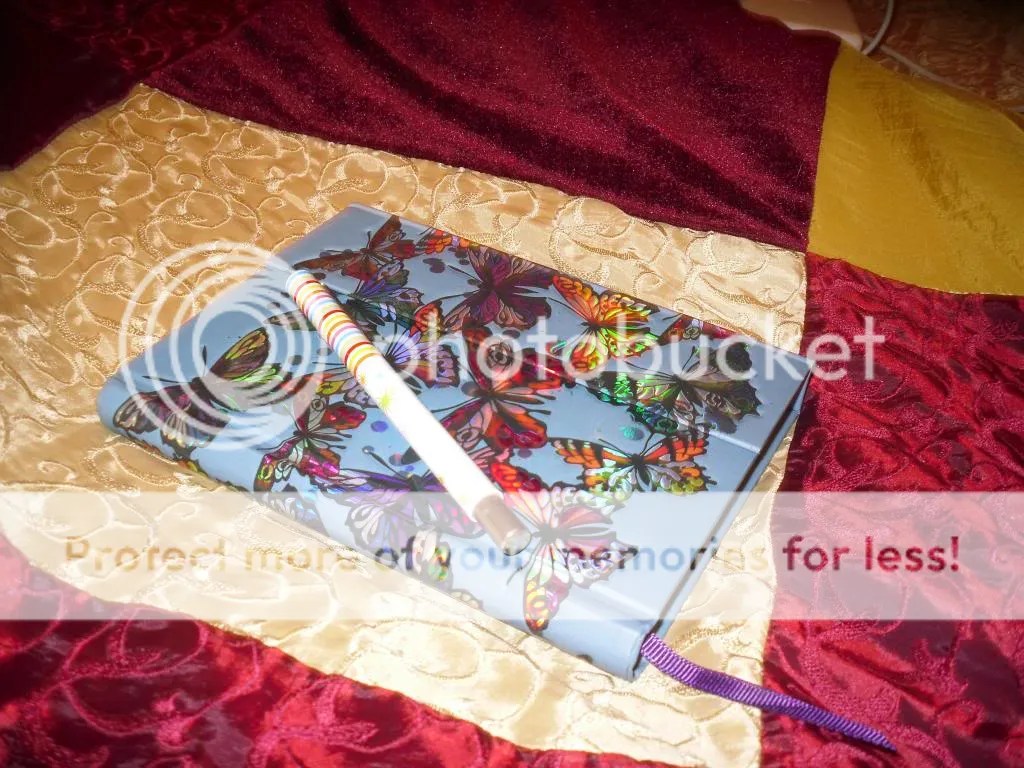
    I don’t have a workspace, unless you include my bed. I usually write all my stories sitting in bed at night. I like the silence and the mood of that time for writing. I still write my first drafts with a pen, so there’s no sitting in front of a computer at a desk for me. It’s rare that I’ll type a story straight onto a computer, but when I do it’s a laptop, so I don’t need a designated space for that. I like to write when the inspiration hits and mostly that’s in places where I don’t have the laptop to hand. I started writing when I didn’t own a computer, back in the old days… I suppose it’s more habit than anything else that keeps me writing by hand, although I must admit that I like writing by hand. I like pens and buy lots of pretty ones, and pretty notepads. I can spend hours in stationary shops. Yes, I know it sounds weird. I actually think, though, that when you write the first draft by hand this can help in the editing stage because you can edit as you type the manuscript. My first drafts are quite poor, but at that stage I am concentrating on getting the story down rather than whether the apostrophes are in the right places or whether the words are spelt correctly. In fact, since the introduction of computers and ‘spellcheck’ my brain has become lazy. I think we rely on computers a bit too much these days. Maybe that’s why I’m being stubborn and refusing to type the first drafts.
    A charming, old-school approach and a lovely quilt! Now it’s “pinned” on my Featured Writers’ Workspace Board on Pinterest. How do you intend to celebrate writing “The End” on your draft?

    I don’t see coming to the end of the draft as a celebration because that’s when the editing begins and I hate editing. Coming to end of the editing, now that is a cause for celebration.

    Which book publishing processes are you going to outsource and which are you confident enough to undertake yourself?

    I always use beta readers and a proofreader for my short stories, and when I’m writing a novel I use an editor as well. I use a formatter for e-books because I have no clue where to begin with all of that. I usually design my own covers. I publish the paperbacks myself on Lulu.com as the process is easy enough even for a technophobe like me.

    Do you have any marketing tips or favorite promotional sites you’d like to share?

    Use #MondayBlogs on Twitter every Monday when promoting stuff on your blog. It’s a great way to get RTs and spread the word. I like the eReader News Today’s “Bargain Book” promotions.

    Twitter in general is a good way to get followers and new readers. One tip for that site is you should follow back and interact with other users.

    Would you like to share with us links where we can find you and your work?

    My website has all my links:http://www.mariasavva.com

    I’m usually on Twitter: http://twitter.com/Maria_Savva

    and Facebook:https://www.facebook.com/pages/Author-Maria-Savva/171466979781

    Maria, thank you and best of luck with Perspectives!

    Thank you for inviting me here, Maria!

  • Angel Sefer – WIP interview

    Angel SeferAngel Sefer is an author of romantic suspense and mystery stories. Her debut novel, Spellbound in His Arms, became a bestseller (#1 Barnes & Noble, #2 Amazon) and was recently picked up and republished by Booktrope. (Read more about this title in the Author Spotlight I posted here.) Now, that’s the kind of success every indie author dreams about. Therefore, it is with great pleasure I host Angel in this week’s Author’s WIP interview, hoping to learn more about her and her work.

    Update: Spellbound in his Arms is a finalist for the Rone Awards 2014 in the Mystery category!

    Angel, thank you for coming. As a warm up, why don’t you tell us a few things about yourself?

    I was born in Athens, Greece. I went to school in Athens and later on in Atlanta, Georgia. I hold a degree in Economics and have worked as an executive in the corporate world on both sides of the Atlantic. However, my true passion is reading and writing fascinating romance, mystery, and suspense novels.

    I live in a beautiful suburb of Athens, with the two loves of my life — my husband and my son. Our house has a great view of the sea and the mountains, which are both great sources of inspiration for me.

    Could you please give us more information on your WIP and what follows Spellbound in His Arms in the “Greek Isles Series”?

    Spellbound in His Arms was the first novel in The Greek Isles Series. In this series, while sharing with my readers the development of the romance between my hero and heroine and the unfolding of the mystery, I also take the opportunity to share with them the unbelievable experience of visiting some of the most enchanting Greek islands.

    I’m currently working with my editor on Deadly Secrets — the second novel in this series, which blends mystery, romance, and suspense on Mykonos, one of the most beautiful Greek islands in the Aegean Sea. The picturesque setting on one hand and the unique way of life on a Greek island, which reflects the values and traditions of the Greek people, on the other, set the background for this intriguing story. Deadly Secrets will be published by Booktrope in about two months.

    At the same time, I’m working on The Heiress of Santorini — the third novel in the series — which will be published this fall.

    All that speaks right to my heart, as I also pen romantic stories in a Greek island setting, although mine are clean-cut contemporaries, so no competition there 🙂 Now a question that I’m sure interests all self-published writers. How does a successful indie author benefit from signing a book deal with a traditional publisher?

    This is a very good question, Maria, but you see, Booktrope is not a traditional publisher. This is what I love about my publisher and made me sign a contract. I have an experienced team of professionals working by my side, and I benefit from their knowledge and expertise while, at the same time, my opinion counts, and I have the final say on what happens with my book.

    At Booktrope, things move as fast as you’re willing to make them happen. With a traditional publisher, it would probably take about a year or longer to get my first book republished and then, a new book published every year or two. Spellbound in His Arms was republished less than two months, after I signed up with them, Deadly Secrets is going to be published within the next two months, and The Heiress of Santorini will be published in fall.

    In a few words, I get all the benefits of a traditional publisher, but also enjoy the freedom and flexibility of an indie author. Not to mention, of course, that I don’t have to pay the upfront costs of an indie writer—editing, cover designing, etc.

    Sounds fantastic! You are indeed very lucky, but as H. Jackson Brown Jr. said: “Luck marches with those who give their very best!” Are you happy with the pace of your work? Do you aim at a specific word count each day?

    No, I don’t aim at a specific word count. Having worked for decades in the corporate world, I’m tired of discipline and deadlines. Writing for me is freedom, thrill, adventure… I’m not inspired every day to write, and when I don’t have inspiration, I don’t write. Some days, I spend time on social media, getting in touch with my friends and fans. Other days, I get lost in the alluring world of my writing…

    The important thing for me is to do it from my heart. My writing can’t be forced. I have to feel it, experience every single scene and the feelings of my hero and heroine.

    Plotter, pantser or both?

    I don’t plan things ahead of time. I see a beautiful photo of a couple or a landscape, and I get inspiration for a story. I start, and the story forms by itself from then on and takes me to wonderful places. I love surprises, as well as twists and turns; so, I use them a lot in my novels.

    I have to love my books first, before anyone else does.

    What’s your worst enemy in getting that first draft finished?

    I don’t feel I have an enemy. It’s all up to me. Of course, everyday life can be very demanding, but it’s all up to us to make the time for the things we want.

     Have you experienced “writer’s block” and how do you overcome it?

    I can’t say that I have. It’s just what I described above — some days are good for writing, and some aren’t.

    Could we take a look at your workspace? Is there a particular place you find inspiring?

    The backbones form in my mind by looking at beautiful photos of couples or landscapes, or by letting my gaze wander over the sea and the mountains. Sometimes, I even think of a story in a dream.

    The actual writing takes place in my office at home — a very special area of my own, where I can have some peace and quiet.

    Now your photo is “pinned” on my Featured Writers’ Workspace Board on Pinterest. How do you intend to celebrate writing “The End” on your draft?

    By enjoying a beautiful day out in the countryside with my little boy and my husband.

    Is romantic suspense the genre you will brand yourself with or do you see yourself branching out in the future?

    I love mystery and suspense, as much as I like romance. So, my favorite books — either reading or writing — are romantic mystery & suspense novels. Of course, I’ve learned in my life to never say “never”. I’m not thinking of writing in another genre right now, but no-one knows what the future holds.

    Would you like to share with us links where we can find you and your work?

    Website:  http://www.angelsefer.com
    Blog:  http://www.angelsefer.blogspot.com
    Facebook:  http://on.fb.me/Vq75eu
    Twitter:  https://twitter.com/AngelSefer
    Google+:  http://bit.ly/13Fa6aU
    Amazon Author’s page:  http://author.to/AngelSefer
    Goodreads Profile:  http://bit.ly/15ePyoE
    E-mail:  angelsefer@ymail.com

    Links for Spellbound in His Arms:

    Amazon:  http://viewbook.at/SpellboundInHisArms

    Barnes & Noble:  http://bit.ly/1eFkkL1

    Angel, thank you for coming and, once again, congratulations on your success!

    Thanks so much for having me, Maria.

    __________________________

    If you are a writer/author (published or not) and would like to be featured, please read the WIP: Guidelines and Perks section and complete the form provided. Only a few slots available until the beginning of June!